 Get Halloween 15% for Limited Time on Lifetime & Bundle Deal


Bus reservation software is the system an operator or ticket seller uses to hold seats, take payment, issue tickets, and manage the trip behind it. The keyword covers a lot of ground – booking engines, seat inventory, agency sales, reporting so this guide focuses on how the software is built and how to compare options, rather than re-explaining feature lists or costs. If you already know you want a WordPress-based plugin and are weighing free against paid, that is a different decision, and we point you there below.
- What "Bus Reservation Software" Actually Refers To
- Core Modules to Compare in Any Reservation Platform
- Questions to Ask Before You Buy
- Hosted Service, Self-Hosted Platform or Plugin
- How Bus Reservation Software Fits Into Your Sales Channels
- Signals That a Platform Will Not Scale With You
- Where Cost Enters the Decision
- Frequently Asked Questions
- Conclusion
What “Bus Reservation Software” Actually Refers To
People use the term for three related things, and mixing them up is the fastest way to buy the wrong product:
- The booking engine. The front-end search, seat selection, and checkout that a passenger uses to reserve a seat.
- The reservation management layer. The back office where schedules, fares, seat allocations, agent bookings, and cancellations live.
- The distribution layer. The part that pushes inventory to your own website, an agent network, or third-party sales channels.
A mature bus reservation platform includes all three. A single-purpose tool usually covers one, and you end up stitching the rest together yourself. Before any demo, decide which of the three you are actually short of.
Core Modules to Compare in Any Reservation Platform
Seat inventory and holds

The important question is not whether the system shows a seat map, but how it behaves when two people want the same seat. Look for temporary holds with an expiry, seat locking during checkout, and a clear rule for what happens when a hold lapses. Inventory that is only released on page unload will sell seats that are already gone.
Trip and schedule management
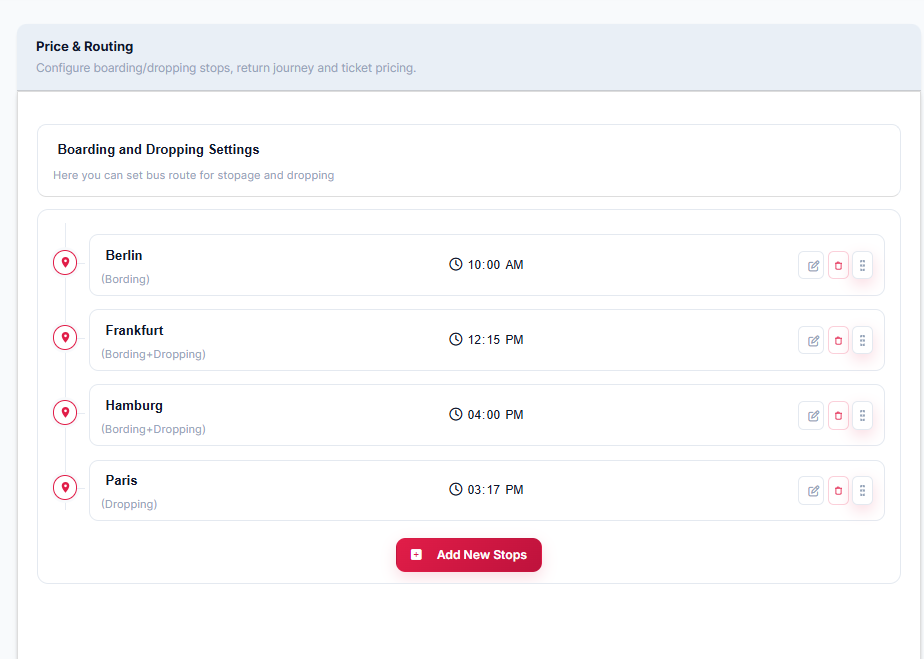
You should be able to create a route once, attach a timetable to it, and reuse both across days of the week and seasonal periods. Re-entering every departure by hand does not scale past a handful of trips, and it is where most manual scheduling errors start.
Fare rules and pricing
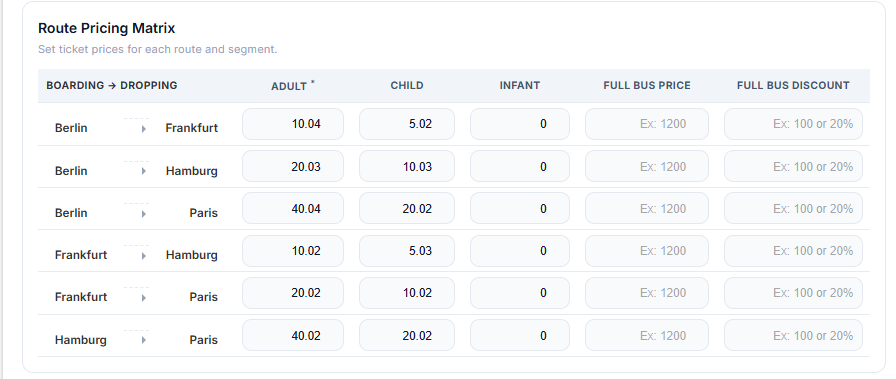
A reservation system needs to price more than one seat type. Check whether it supports:
- Price bands per seat category (sleeper, semi-sleeper, upper and lower deck)
- Boarding and dropping point pricing on the same route
- Child, student, or senior concessions
- Seasonal or festival fare overrides
- Discount codes that do not break the seat-level price logic
Payments and settlement
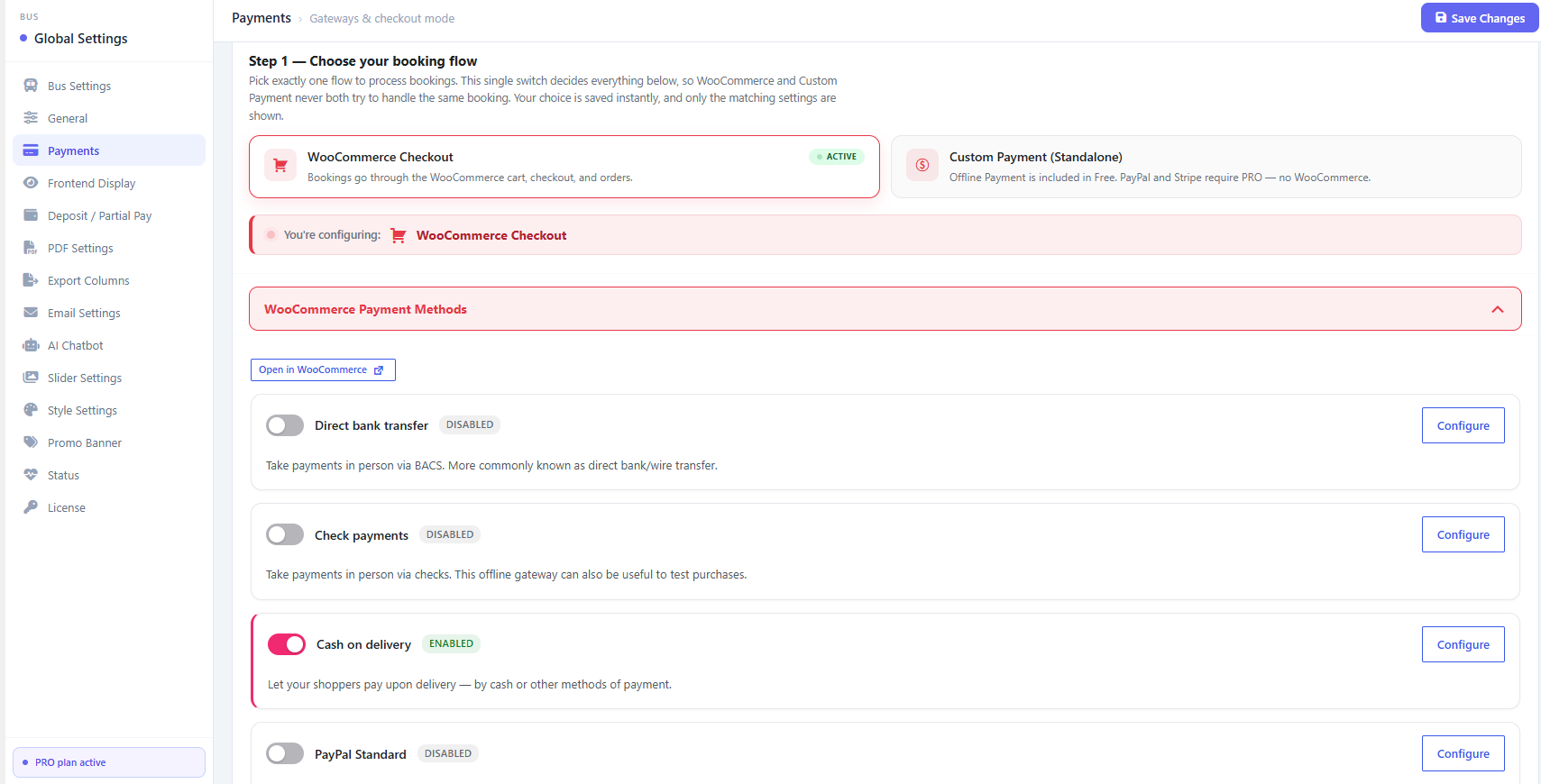
Ask which gateways are supported locally, how refunds are triggered, and whether agent commissions settle automatically or need manual reconciliation. Refund handling is the module operators complain about most, so test it during the trial rather than after launch.
Ticket delivery and validation
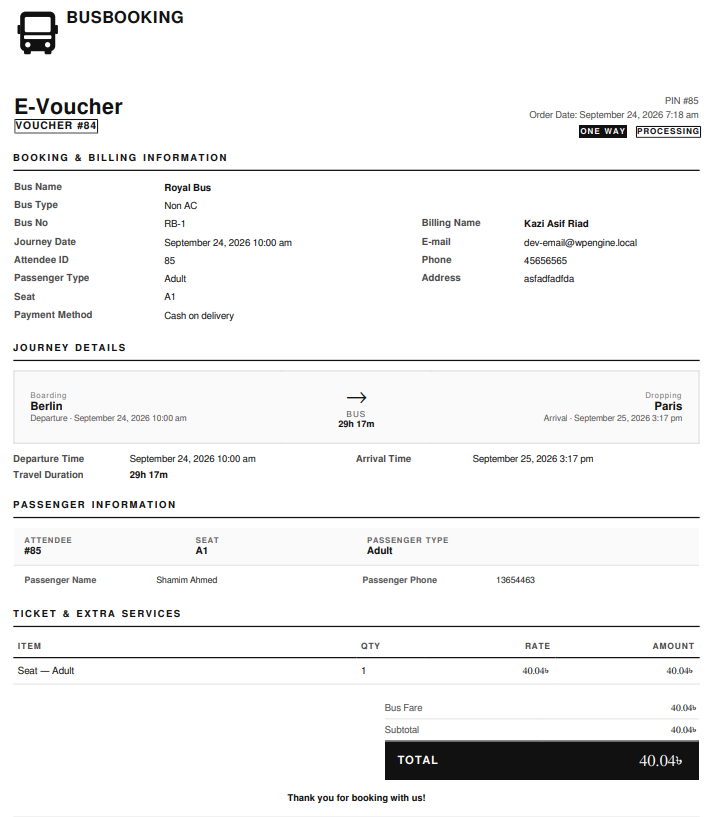
Confirmation by email or SMS is table stakes. Validation is where systems differ: a scannable code on the ticket lets a conductor or gate staff mark a seat as boarded and blocks the same ticket from being reused. If you need that workflow, it is worth reading a focused walkthrough such as adding a bus ticket QR code to WordPress rather than assuming every platform ships it.
Reporting and reconciliation
You want trip-level load factor, revenue by route, agent-wise sales, and a cancellation log. If the platform only exports a raw order list, plan for spreadsheet work every week.
Questions to Ask Before You Buy
- Who owns the data, and can I export it? Ask for the export format in writing.
- What happens at peak load? Festival periods are the real stress test, not a quiet Tuesday.
- How are offline counter sales handled? Most operators still sell at the terminal and need those seats in the same inventory pool.
- Is multi-operator or multi-branch supported? If you plan to add routes or partners, retrofitting this later is expensive.
- What is the update and support cadence? A reservation system touches payments, so security updates matter.
- Can I test refunds and cancellations during the trial? If the answer is no, that tells you something.
Hosted Service, Self-Hosted Platform or Plugin
Reservation software is generally delivered in one of three shapes, and the trade-offs are practical rather than ideological.
| Model | You control | Best fit | Main trade-off |
|---|---|---|---|
| Hosted SaaS reservation service | Little; vendor runs hosting and updates | Small fleets that want to be live fast | Recurring fees per booking or per month, and limited customisation |
| Self-hosted platform licence | Server, data, customisation | Established operators with IT support | You carry maintenance and security |
| Website plugin (e.g. WordPress) | Your existing site, themes and plugins | Operators who already run a WordPress site | Stability depends on theme and plugin compatibility |
If you are building on WordPress, the plugin route keeps the booking flow inside a site you already manage. That is a well-covered path – see how to create a bus booking website with a WordPress plugin for the setup side. The choice between the three models is mostly about how much control you want over data and design versus how much maintenance you want to hand off.
How Bus Reservation Software Fits Into Your Sales Channels
The reservation engine is the source of truth, and every channel reads from it. Common setups include:
- Direct online: your own website, sometimes with a mobile-friendly checkout as the priority.
- Counter or terminal: staff booking into the same seat inventory, often with a fast-key entry screen.
- Agent network: travel shops and resellers who need their own login, commission view, and cancellation limits.
- Corporate or contract travel: invoiced bookings for companies rather than individual passengers.
The failure mode is running two inventories – one online, one on paper – and overselling a departure. Anyone comparing platforms should test a simultaneous booking from two channels before signing.
Signals That a Platform Will Not Scale With You
- Seat availability refreshed on a long timer instead of in real time
- No API or webhook, so nothing can be integrated later
- Route and schedule creation that cannot be templated
- Reports that cannot be filtered by date range, route, or agent
- No staging environment, meaning every change happens on the live site
- Pricing that is quoted per booking with no way to forecast a busy month
Where Cost Enters the Decision
Reservation software is usually priced by fleet size, booking volume, agent seats, or a platform fee – and vendors rarely publish every tier, so check current pricing directly rather than relying on a blog figure. If your question is specifically whether to start on a free tier or pay for a licensed product, that is a cost-focused comparison rather than a systems one, and it is covered in free vs paid bus ticket booking software costs.
Frequently Asked Questions
Is bus reservation software different from a booking plugin?
A plugin is one delivery method for reservation software. The capabilities – seat inventory, fares, payments, tickets – are the same; the difference is that a plugin runs inside your existing website rather than as a separate application.
Can one system handle both online and counter sales?
Yes, and it should. The requirement is a single inventory pool with different interfaces for staff and passengers, not two separate systems.
How long does implementation usually take?
It depends on how many routes, fare rules, and payment gateways you need configured, and on whether you are migrating existing bookings. Ask the vendor for an implementation checklist and estimate in writing before you commit.
What is the biggest cause of overselling?
Delayed seat locks and separate inventories per sales channel. Both are avoidable with temporary holds and a single source of truth for seat status.
Conclusion
Comparing bus reservation software comes down to four things: how inventory is locked, how flexible the fare and schedule rules are, how cleanly refunds and settlement work, and whether the platform can be integrated as you grow. Get those right and the surrounding features become a matter of preference. Test the hard parts – concurrent bookings, cancellations, refunds – during the trial, and confirm current pricing and implementation scope with each vendor before you decide.