 Get Halloween 15% for Limited Time on Lifetime & Bundle Deal

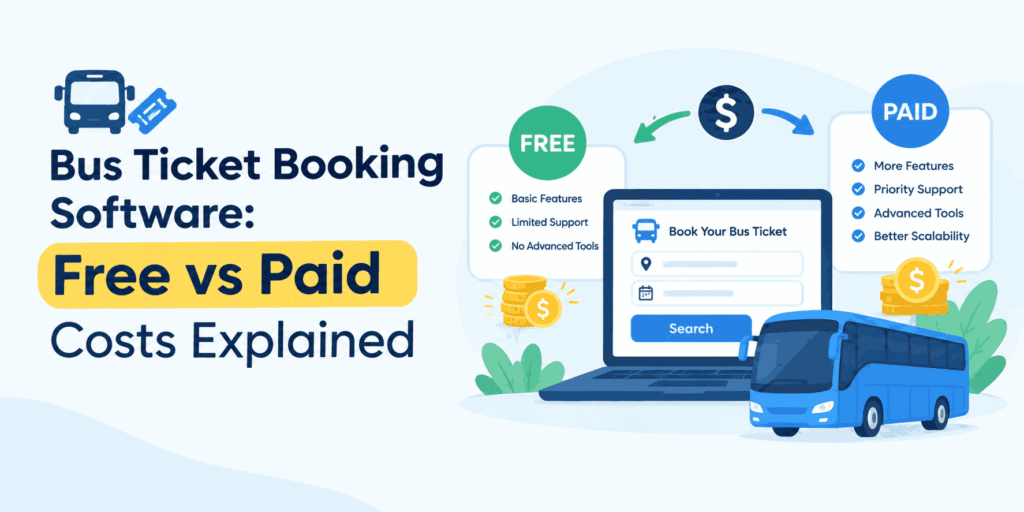
Choosing bus ticket booking software usually comes down to money: what it costs up front, what it costs every month, and what it quietly costs every time a passenger books. This guide breaks down the free-versus-paid decision, the pricing models you will actually be quoted, and the cost traps that catch operators out so you can compare platforms on total cost of ownership rather than on the headline price.
- What Bus Ticket Booking Software Actually Costs
- Free vs Paid Bus Booking Software: Which Fits Your Business?
- The Four Pricing Models You Will Be Quoted
- The Hidden Costs Nobody Quotes You
- How to Compare Total Cost of Ownership: 6 Steps
- What You Should Get in Every Price Tier
- Free vs Paid in Practice: Two Operator Scenarios
- Red Flags That Inflate the Real Price
- Frequently Asked Questions
- The Short Version
What Bus Ticket Booking Software Actually Costs
Bus ticket booking software is rarely a single line item. Most platforms bundle four separate charges, and comparing only one of them is how operators end up overspending.
- Licence or subscription — a one-time purchase, an annual renewal, or a monthly plan.
- Per-booking commission — a percentage or flat fee taken from each ticket sold.
- Payment gateway fees — charged by the bank or gateway, not the software vendor.
- Setup, hosting and support — sometimes included, sometimes quoted separately.
When you ask a vendor for pricing, ask for all four. A platform with a low monthly fee and a commission on every sale can cost far more in a busy season than a higher flat fee with no commission at all.
Free vs Paid Bus Booking Software: Which Fits Your Business?
Free options are not a compromise for everyone. They are simply designed for a different scale of operation.
| Consideration | Free/open-source plugin | Paid or SaaS platform |
|---|---|---|
| Up-front cost | Little to none | Licence or setup fee applies |
| Ongoing cost | You pay for hosting and your own time | Subscription, sometimes plus commission |
| Setup effort | You configure everything yourself | Vendor-assisted onboarding is common |
| Payment handling | Your own gateway account | Often bundled with settlement support |
| Best for | Single operators, small fleets, first website | Multi-route operators, agents, high volume |
| Pricing figures | Check current pricing — plans and commissions change often | |
When free software is the right call
If you run one or two routes, sell mostly to repeat passengers, and already have a WordPress site, a free booking plugin plus hosting is genuinely the cheapest credible route to selling seats online. Your real investment is configuration time, not licence fees.
When paying is cheaper in the long run
Paid platforms start to win once you add agents, multiple boarding points, seasonal spikes, or several bus types. Assistant-console features, agent commission tracking, and automated settlement all reduce manual work, and manual work is the most expensive item in most bus businesses.
The Four Pricing Models You Will Be Quoted
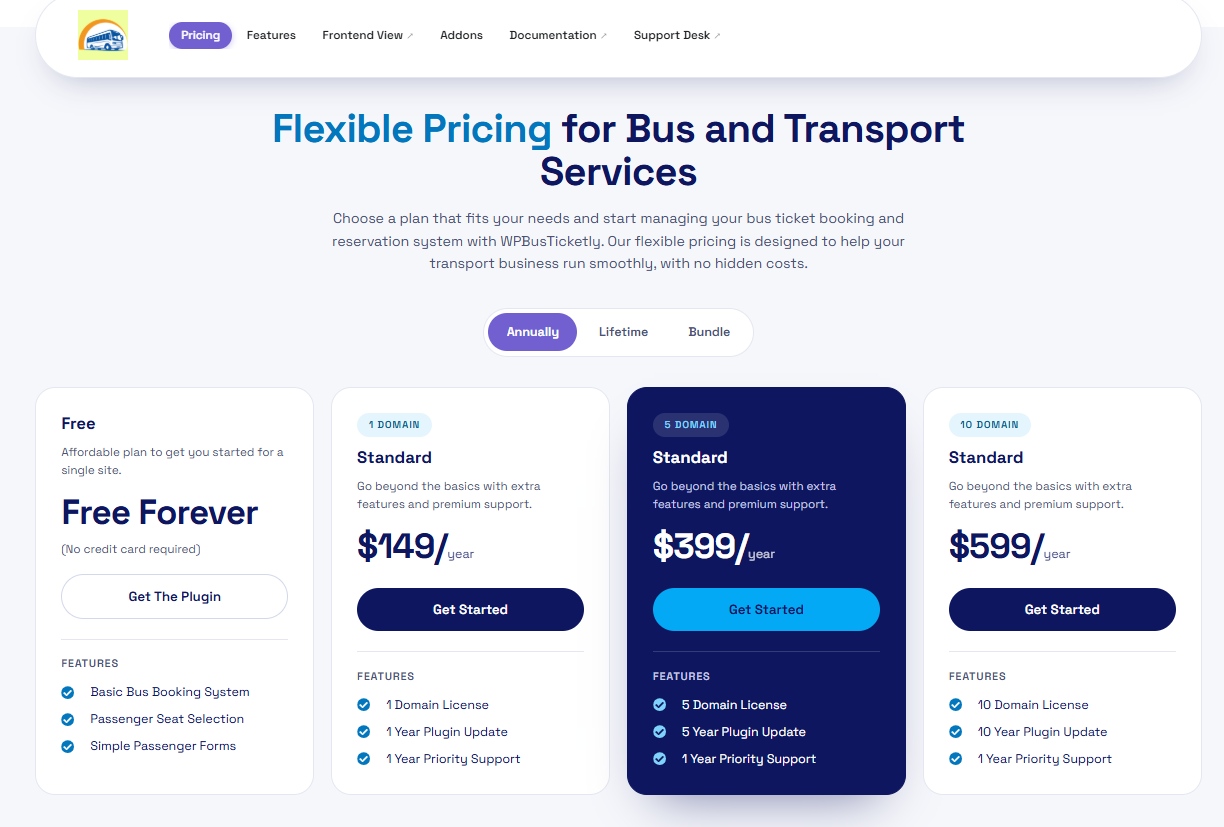
1. Free or freemium plugin
No licence fee; you pay for hosting, a domain, and your own maintenance. Revenue, if the vendor takes any, usually comes from a paid tier or add-ons. Best when volume is low, and your requirements are standard.
2. One-time licence
A single purchase with optional paid support or renewal. Predictable and friendly to cash flow, but you own upgrades, hosting, and security yourself. Ask what happens to the licence if you stop renewing support.
3. Monthly or annual subscription
Lower entry cost, continuous updates and support included. The longer you stay, the more you pay in total, so compare three-year totals rather than year one.
4. Commission-based marketplace
The software is cheap or free because the platform takes a cut of each ticket. This is attractive at low volume and painful at high volume. Model your busiest month, not your average one, before signing.
The Hidden Costs Nobody Quotes You
These are the items that turn a tidy budget into an overspend. Budget for them explicitly.
- Payment gateway fees and settlement delays — a per-transaction charge plus the cost of money arriving days late.
- Training and staff time — counter staff, drivers and agents all need to learn the system.
- Data migration — moving routes, schedules and passenger records from spreadsheets or an old system.
- Customisation — printable tickets, boarding-point logic, seat-map layouts, fare rules and any local-language requirement.
- Hardware — handheld ticket scanners, printers or counter terminals if you issue paper tickets at the gate.
- Support and maintenance — after the first year, who fixes it when a checkout breaks on a Friday night?
- Abandoned bookings — a clunky seat-selection flow costs revenue long before it costs a licence fee.
Check out the best price tag of Bus Booking WordPress Plugin.
How to Compare Total Cost of Ownership: 6 Steps
- Estimate monthly tickets sold — use a realistic peak-season figure, not a quiet week.
- List every fee you would pay — licence, commission, gateway, hosting, support.
- Build a 12-month total — multiply commission models by your peak volume, not your average.
- Add internal labour — hours per week for setup, training, and manual reconciliation.
- Add switching cost — what it costs to leave if the platform stops fitting you.
- Test before you commit — run a live sale on a trial or demo, including a refund.
If a vendor cannot give you a straight answer on commission, settlement timing, or export of your own passenger data, treat that as a cost, not an omission.
What You Should Get in Every Price Tier
Cheap software becomes expensive when it lacks basics. Regardless of budget, confirm these before you pay:
- Real-time seat availability that cannot be double-booked across counters and agents.
- Clear seat maps with boarding and drop-off points.
- Online payment plus a printed or digital ticket the passenger can show at the gate.
- Booking confirmation and cancellation handling without support tickets.
- Reports on sales, occupancy per trip, and agent performance.
- Ownership of your data and a straightforward export path.
For a detailed checklist of the product capabilities behind these requirements, see this guide to the features a modern bus ticket platform must have. It focuses on what the software does; this article stays on what it costs.
Free vs Paid in Practice: Two Operator Scenarios
Single operator, two routes, WordPress site
A free booking plugin plus hosting is likely the lowest total cost. You trade licence fees for your own setup time. The main risk is a weak seat-selection flow costing bookings, not the software bill.
Multi-route operator with agents and seasonal peaks
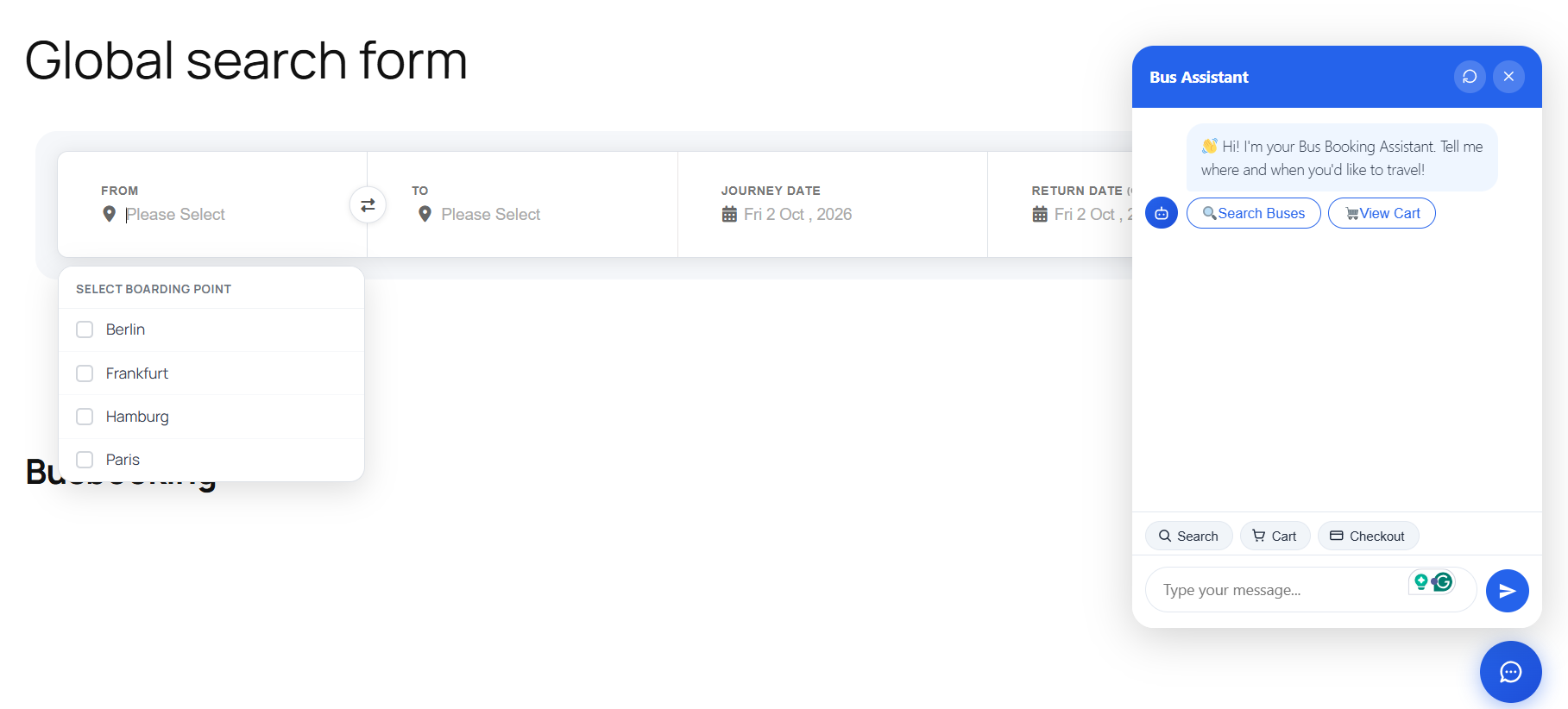
A paid platform with agent consoles and settlement features usually pays for itself by removing manual reconciliation. When you compare here, price the commission model against your busiest month; that is where marketplace-style fees stop looking free.
Whichever side you land on, build the site on infrastructure that will not need replacing in a year. If you want the platform decision itself rather than the pricing decision, see why WordPress fits bus ticket booking with seat reservation.
Red Flags That Inflate the Real Price
- Commission percentages disclosed only after a demo request.
- No trial, no sandbox, and no refund terms.
- Passenger and route data you cannot export.
- Support that ends the moment the licence lapses.
- Per-booking overage charges with no published threshold.
Frequently Asked Questions
Is free bus ticket booking software good enough to sell tickets?
For a small operator on a handful of routes, yes. Free plugins handle seat selection, online payment, and confirmations. The cost moves to your time and hosting rather than a licence fee. Above that scale, agent management and reporting gaps usually push you to a paid tier.
What is a normal commission on bus ticket software?
Commission structures vary widely by vendor, country, and volume, and they change often. Ask for the rate in writing, including whether it applies to the ticket price or the booking fee, then run your own peak-month calculation. Check current pricing with each vendor before you commit.
Are there setup fees?
Some vendors include onboarding, others charge separately for setup, data migration or customisation. Ask for a written breakdown covering setup, training, migration and any custom development before you compare two quotes.
Can I switch platforms later without losing my data?
You can, if your agreement lets you export bookings, passenger records and route data. Make export rights part of the decision, not a question you ask after a year. Migration effort is a real cost of switching.
The Short Version
Bus ticket booking software pricing comes down to how you pay: a licence, a subscription, or a cut of every ticket. Free plugins keep the licence at zero but ask for your time; paid platforms ask for money and give back automation, agent tools, and support. Compare a 12-month total ownership figure, include gateway fees and staff time, and never decide on the headline price alone.