 Get Halloween 15% for Limited Time on Lifetime & Bundle Deal



Running a rental business is a two-part job keeping assets in good shape and keeping them booked. This guide covers the second part: the marketing and demand-generation work that turns a well-maintained fleet, property, or equipment yard into a predictable revenue stream. Below are eight strategies you can apply this month, plus the metrics that tell you whether they are working.
- Why rental business marketing works differently
- 1. Build demand around the calendar, not around the asset
- 2. Get your listings onto the channels renters actually use
- 3. Convert browsing traffic with better availability signals
- 4. Turn reviews into your primary ad channel
- 5. Price for utilisation, not for prestige
- 6. Build a repeat and referral engine
- 7. Protect the operation while you grow it
- 8. Measure four numbers, not twenty
- Where to start this week
Why rental business marketing works differently
Marketing a rental company is not the same as marketing a product. You are not selling a thing; you are selling access to a thing for a limited window. That changes almost everything about how you should approach demand generation:
- Availability is part of the offer. A perfect listing with no open dates converts nobody. Your calendar and your marketing are the same conversation.
- Utilisation beats revenue. An asset that sits idle still costs you depreciation, storage and insurance. The goal is to shrink idle days, not just raise the price per day.
- Repeat customers are the cheapest growth. Someone who has already rented from you has no trust barrier to cross and no learning curve. A first-time renter costs you far more to acquire.
- Trust is the whole transaction. Renters hand over a deposit and take an asset they do not own. Reviews, clear terms, and visible policies do more selling than any headline.
Keep those four points in mind, and most of the tactics below will make intuitive sense.
1. Build demand around the calendar, not around the asset
Most rental operators describe their business by what they own: “we have twelve kayaks.” Renters search by what they want to do: “kayak rental near the lake this Saturday.” Rewrite your listing copy so the use case, the location, and the time window are all visible in the first two lines.
Then work backwards from your emptiest periods. List your slowest weeks and months, and design an offer for each one a weekday rate, a two-day bundle, an off-season package. Blanket discounts erode your peak margin; targeted ones fill gaps that were earning nothing.
2. Get your listings onto the channels renters actually use
There is no single place people look for rentals, because rentals are not one market. Where you show up depends on what you rent:
| Rental type | Where demand usually starts | What convinces the renter |
|---|---|---|
| Vacation property | Marketplace and local search | Photos, sleep count, proximity to landmarks |
| Vehicles | Local search and marketplace apps | Transmission type, mileage policy, pickup point |
| Equipment and tools | Local search and word of mouth | Specs, capacity, delivery and collection |
| Gear and party items | Social, referrals, marketplace listings | Availability on the exact date, condition, deposit |
The practical takeaway: own one channel you control your own website and treat every marketplace as a supplement, not a home. Marketplace fees, ranking changes, and policy shifts can cut your margins overnight, and you cannot fix that from someone else’s platform.
If your own booking site is the weak link, it is worth fixing before you spend anything on ads. A site that runs on WordPress can handle this with a dedicated booking plugin; see this guide to vacation rental booking plugins for WordPress if property is your category.
3. Convert browsing traffic with better availability signals
Most visitors arrive already interested. What stops them is friction or doubt. Strip out both:
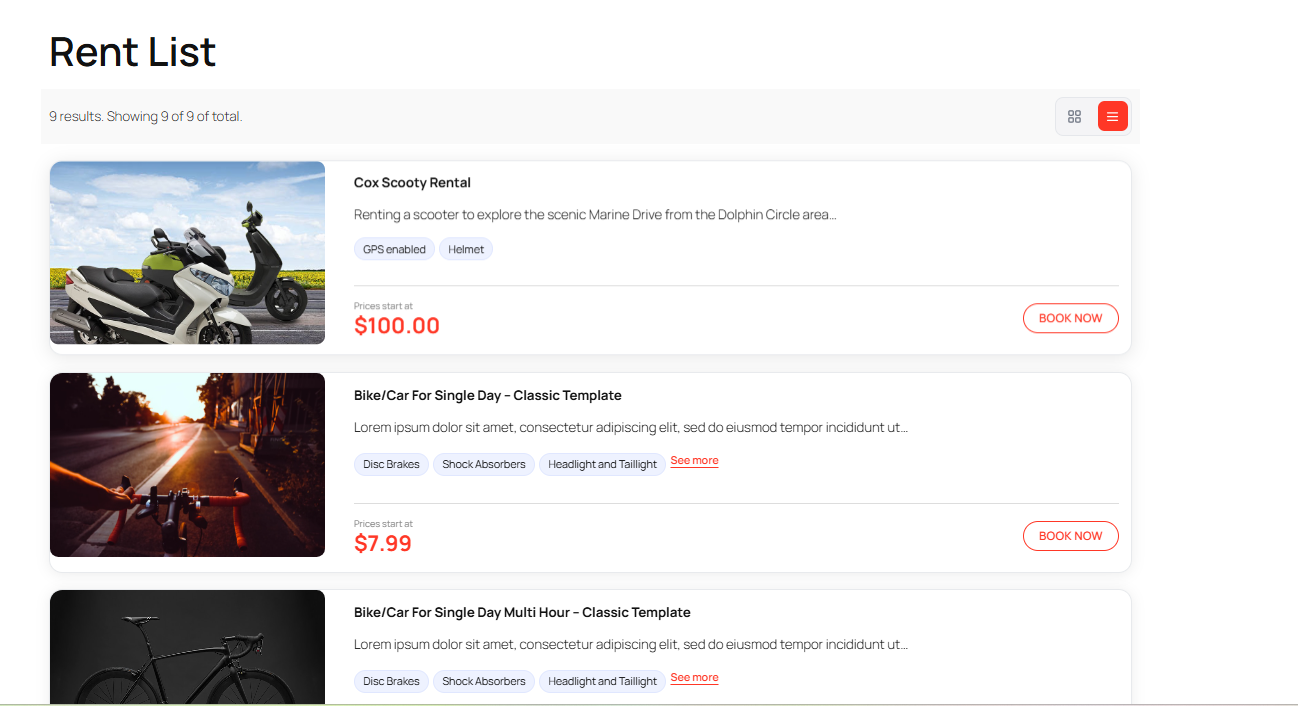
- Show live availability on the listing page. Removing the step of “email us to ask if it’s free” is one of the biggest wins available.
- Price transparently. Show the daily rate, the cleaning or prep fee, the deposit, and the security terms in one place. Surprise fees are a booking killer.
- Answer the top five questions. What’s included, what breaks your deposit, how pickup works, cancellation terms, and whether delivery is available.
- Make the mobile path short. A surprising share of rental enquiries happen on a phone, often days before the rental date.
4. Turn reviews into your primary ad channel
In rentals, social proof outperforms almost every paid channel per taka or dollar spent. Renters cannot inspect the asset before committing, so they read other people’s experience instead.
- Ask for a review at the moment of return, while the experience is fresh, not three days later.
- Make the ask specific: “How was the pickup process?” gets better material than “Please rate us.”
- Reply to every review, including the bad ones. A calm, factual response to a complaint reassures more future renters than the complaint discourages.
- Publish reviews on your own site too. A rotating testimonial block on category pages is free and effective.
Do not buy reviews, and do not invent them. In a trust-driven category, one exposed fake review does damage that takes a year to undo.
5. Price for utilisation, not for prestige
A rental business has two levers: rate and occupancy. Raising the rate is easy to attempt and easy to regret. Improving occupancy compounds.
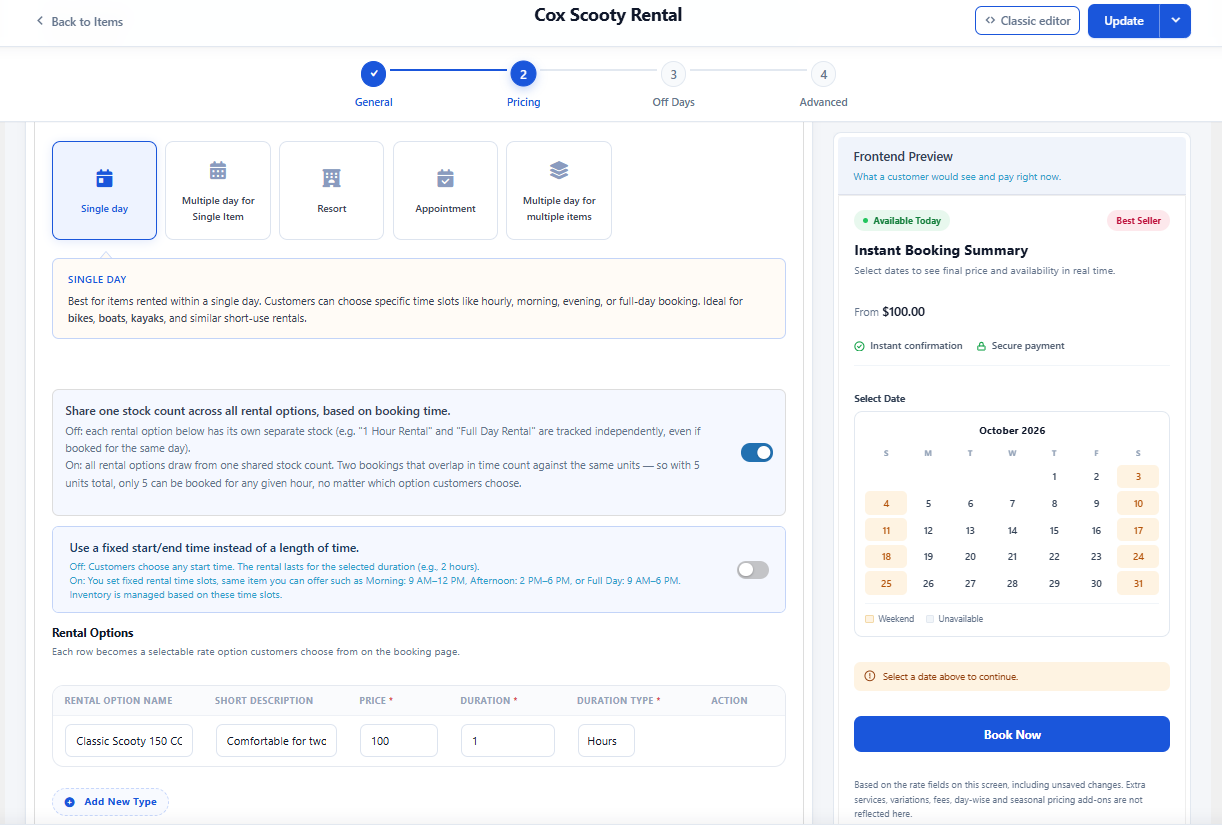
- Know your breakeven occupancy. The share of days you must rent an asset just to cover its costs is the number you manage against.
- Tier your pricing. Weekend, weekday, weekly, and long-term rates all have different price sensitivity. A week-long booking at a discount usually beats four separate short bookings.
- Charge for the extras. Delivery, setup, insurance waivers, and consumables are legitimate add-ons. They also raise the average booking value without touching your headline rate.
- Review rates seasonally. What filled your calendar last spring may be mispriced this spring. Use your own booking history rather than copying a competitor’s published rate.
6. Build a repeat and referral engine
Acquiring a new renter costs far more than reactivating an old one, yet most rental businesses do nothing after the asset comes back. Fix that:
- Send a simple reminder roughly a season after a rental, timed to when that customer would plausibly need the item again.
- Offer a loyalty rate or a free add-on for a second booking a low-cost nudge that costs nothing when calendars are empty.
- Ask for referrals from your best customers. Someone who rents a party tent every summer knows three other people who do.
- Segment your list. Equipment renters, event renters, and holiday guests respond to very different messages.
7. Protect the operation while you grow it
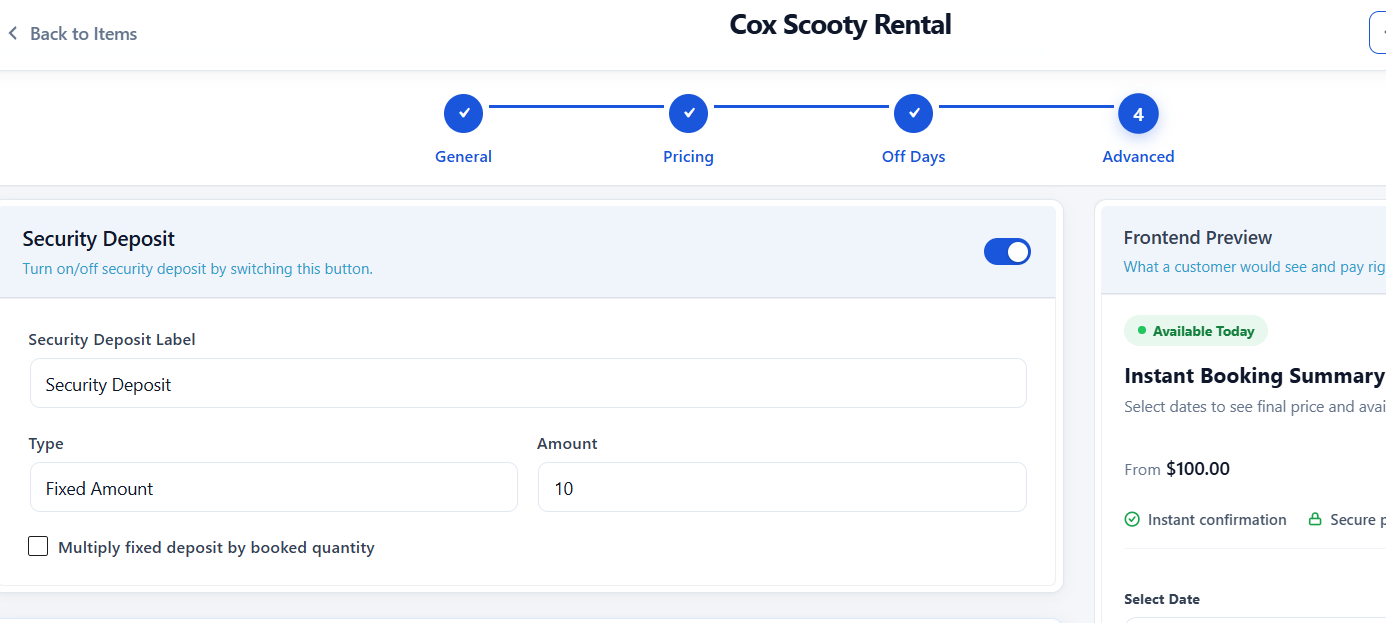
Marketing brings bookings. Operations is what makes those bookings profitable and repeatable. Three habits matter more than any campaign:
- Document condition at handover. Timestamped photos on pickup and return settle almost every dispute about damage and deposits.
- Publish clear terms. Cancellation windows, late returns, damage liability and prohibited use should be readable before booking, not sprung at collection.
- Secure your booking data. Customer records, deposit information and payment details need the same care as any e-commerce store. If you run bookings on WordPress, this WordPress rental plugin security checklist covers the protective steps worth taking.
8. Measure four numbers, not twenty
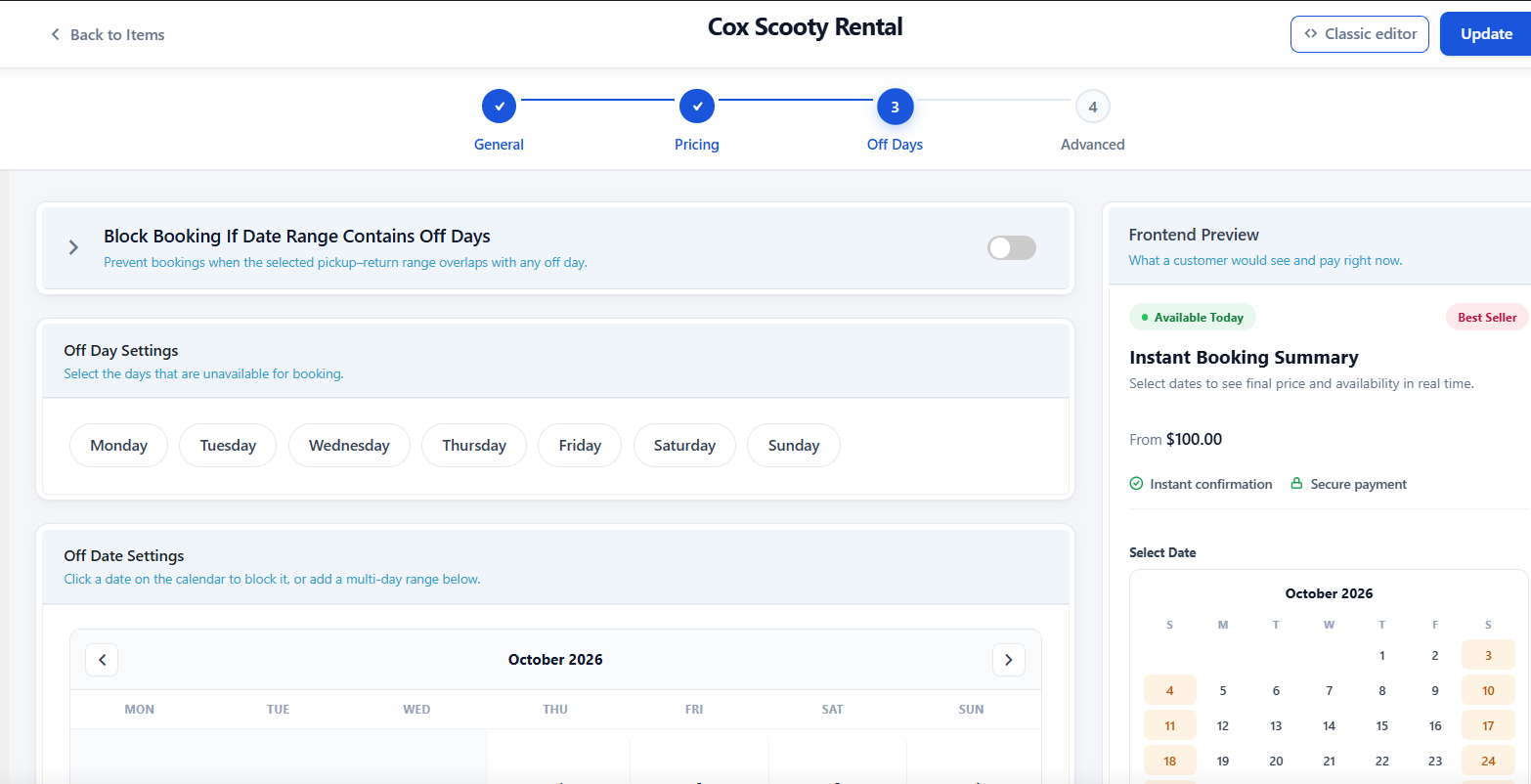
Most rental operators drown in dashboards and track nothing useful. These four show whether your marketing is actually working:
- Utilisation rate — the percentage of available days actually rented across your fleet.
- Average booking value — rate plus add-ons plus any delivery fees, per booking.
- Repeat rate — the share of bookings that come from customers who have rented before.
- Cost per booking — total marketing spend divided by bookings won. Track this per channel so you can cut what does not pay.
Add seasonality context to all four. A utilisation figure means nothing in isolation; the same 40% is strong for a boat in December and poor for a heater in January.
Where to start this week
Pick two moves rather than all eight. Rewrite your three worst-performing listings around use case, location, and date, then set up a review request at the point of return. Both are cheap, both compound, and both feed the numbers in the section above.
Once demand is arriving reliably, the natural next constraint is capacity and process, which is when it makes sense to look at how the rest of your rental workflow is structured, from availability to deposits. If your real constraint is a specific equipment category rather than general demand, an equipment rental website setup walkthrough will be more useful than a broad marketing plan.
Get the fundamentals right visible availability, transparent pricing, earned reviews, and a repeat engine and a rental business becomes far less seasonal and far more predictable than most owners expect.