 Get Halloween 15% for Limited Time on Lifetime & Bundle Deal


Setting up a QR code addon for an event takes about ten minutes of configuration, but it changes how your door works on the day. Instead of printed lists and torn ticket stubs, every attendee arrives with a unique code on a PDF ticket that your ticket master scans on a phone, and the system instantly confirms whether that ticket is genuine and whether it has already been used.
This step-by-step guide covers the whole process in WordPress: buying and installing the WooCommerce Event QR Code Addon, activating it alongside the event manager plugin, configuring the QR settings panel, choosing which user role can scan, and testing a real order end to end. It is written for the MagePeople QR code addon that extends WooCommerce Event Manager (WpEvently), so the menus you see will match the screenshots below.
Why use QR codes on event tickets?
Before the technical steps, it helps to know what you are gaining. QR codes are not decoration on a ticket — they are the bridge between the ticket in someone’s inbox and the check-in record on your site.
- Faster doors. Scanning a code takes a second or two per person, so queues at large events shrink dramatically compared with searching names on a printed sheet.
- Harder to counterfeit. Each ticket carries its own unique code, which makes duplicating a valid ticket impractical. Only genuine ticket holders get in.
- Mobile-first by design. Attendees can open the PDF ticket on their phone at the gate. No printing, no lost paper, no “I left it at home” conversations.
- Usable check-in data. Because every scan is recorded against an attendee, you can see how many people actually arrived, at what time, and which ticket types were redeemed.
Events consistently rank among the sectors with the highest QR code scan volumes in published QR usage reports, which is a good sign that attendees already know what to do when they see one at a door.
Before you start: requirements and prerequisites
The QR code addon is an extension, not a standalone ticketing system. It will not do anything on its own, so line up the following first:
- WooCommerce installed and active. Tickets are sold as WooCommerce products, so orders, payments and emails must already work.
- WooCommerce Event Manager Pro (WpEvently Pro) active. The QR code addon is designed to work with the Pro version. If you are on the free version, upgrade first or the addon’s settings tab will not appear.
- At least one published event with a bookable ticket. You cannot test a scan without something to scan. If this is your first event, follow how to use WooCommerce for event registration before continuing.
- A scanner device. Any smartphone with a camera and a browser is enough. No dedicated hardware is required.
- One WordPress user account for the door team. Scanners need a login with the right role — you will set this in a later step.
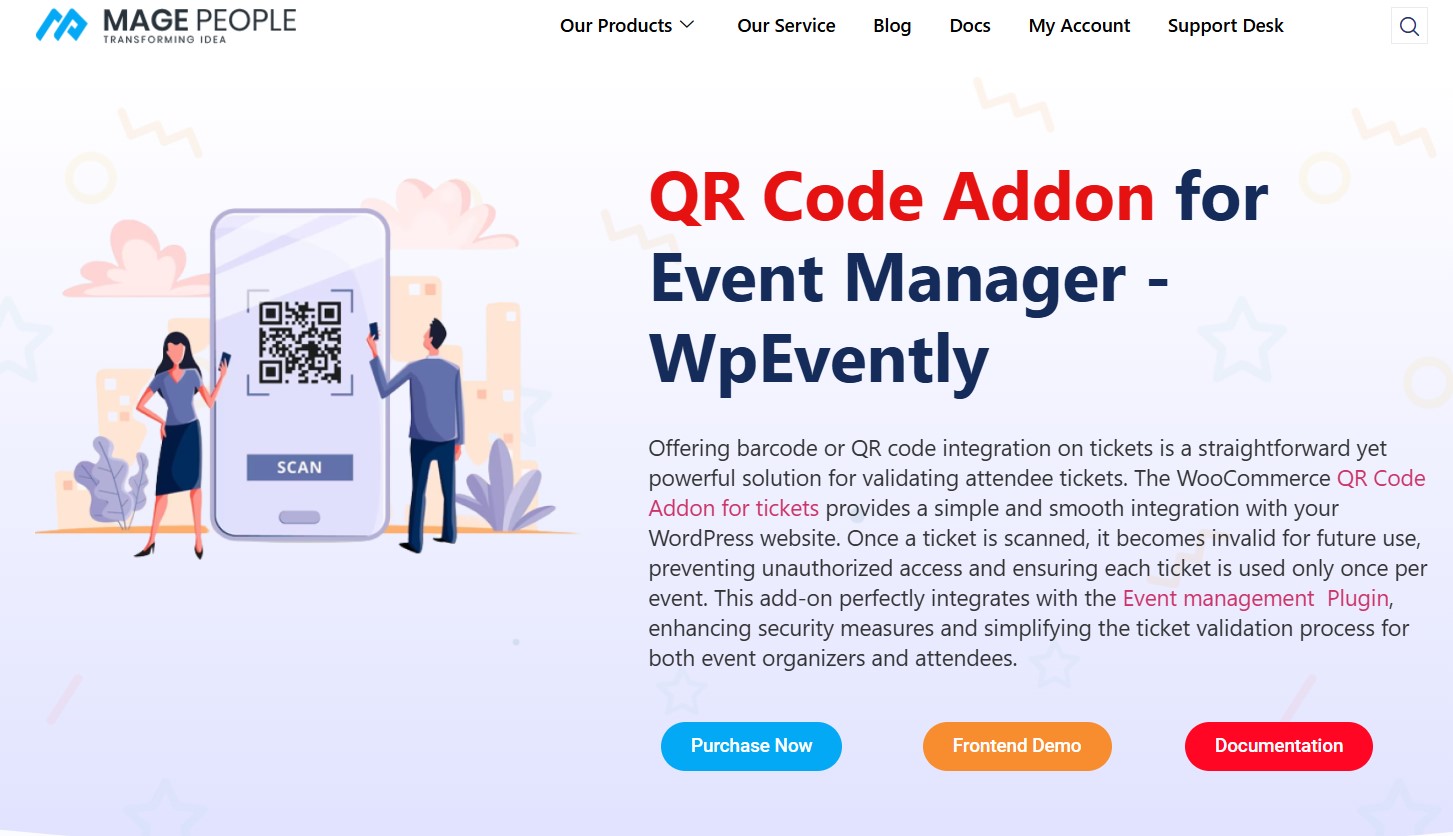
You can purchase the WpEvently Pro event booking plugin from the MagePeople website, and the addon itself separately from the WooCommerce Event QR Code Addon product page. Check current pricing and licence terms on each product page, since plans and bundle options change.
How to set up a QR code addon for an event
Work through the following five steps in order. Each one builds on the last, and the screenshots show exactly what your dashboard should look like at that point.
Step 1: Confirm your event manager plugin is Pro
Log in to your WordPress dashboard and open the event settings. Scan the global options for a QR Code entry. On a Pro installation without the addon installed, you will not find a QR code section yet — that is expected, and it confirms your base plugin is in place and simply waiting for the extension.
If you are still deciding whether WpEvently fits your setup, it helps to compare it against the alternatives rather than assuming.
Step 2: Purchase and download the QR code addon
Buy the addon while logged in to the MagePeople account you used for the event manager licence. Download the addon ZIP file from your account’s downloads area — do not unzip it. WordPress installs plugin archives from the ZIP as-is, and an unpacked folder will fail with a “missing style.css” style error.

Step 3: Install and activate the addon in WordPress
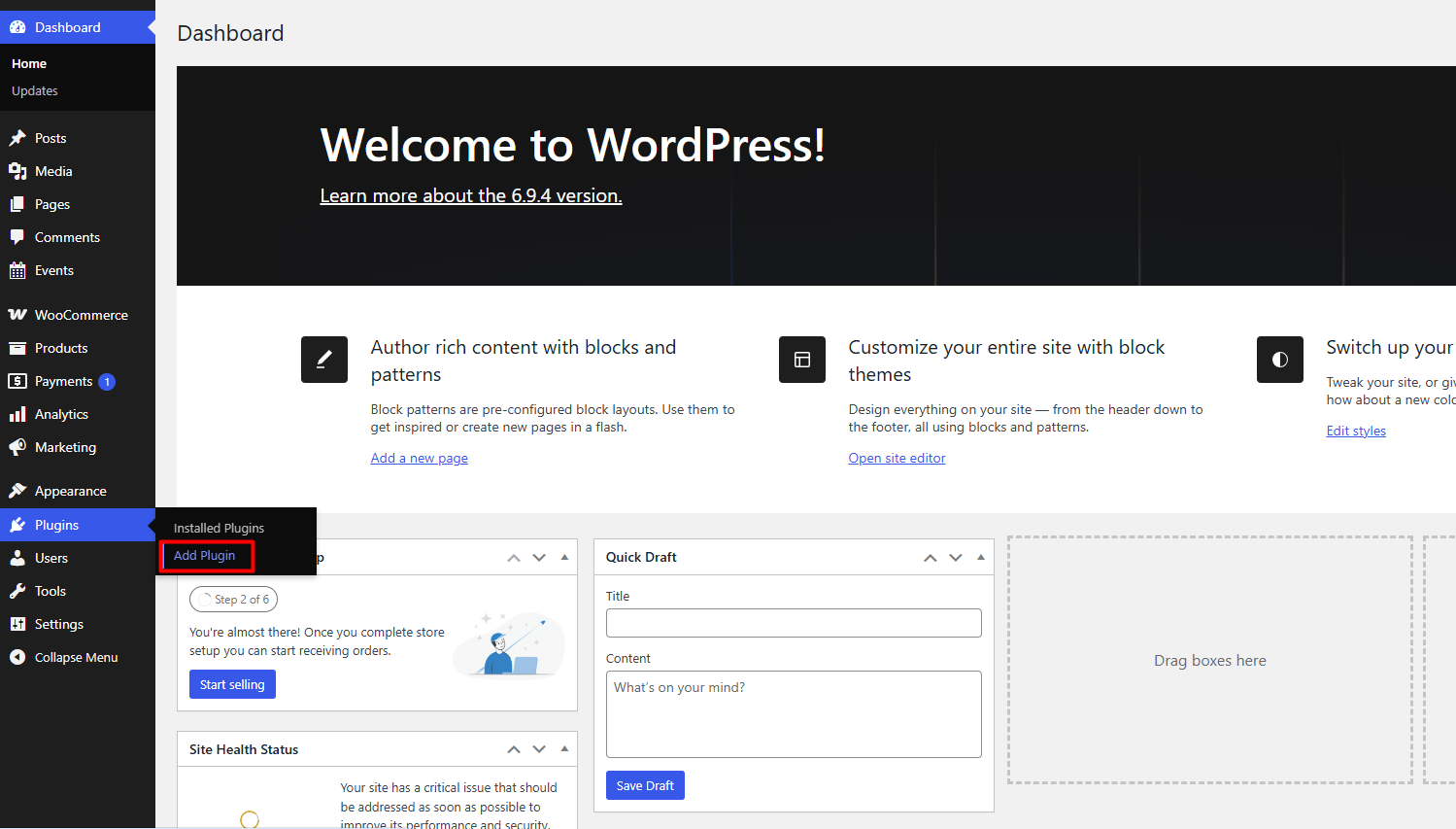
From your dashboard, go to Plugins → Add New Plugin → Upload Plugin. Choose the ZIP file you downloaded, click Install Now, then click Activate.
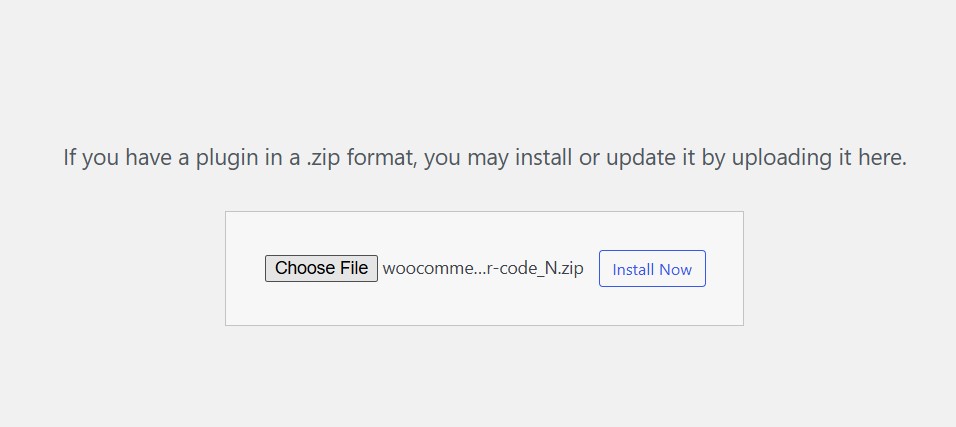
If you would rather not upload a file, the addon can also be installed through the licence and updates area of the base plugin if your MagePeople account is connected. Uploading the ZIP is the most reliable route for a first install.
Step 4: Verify the new QR Code Settings tab appears
Once activation succeeds, refresh your event settings page. A new QR Code Settings entry should now be listed under the event plugin’s global options. Seeing this tab is your confirmation that the addon is correctly installed, licensed and recognised by the base plugin.

If the tab is missing after activation, deactivate and reactivate the addon, and confirm you are running the Pro version of the event manager. A version mismatch between the addon and the base plugin is the most common cause.
Step 5: Configure the QR code settings
Click into QR Code Settings. Two options matter most:
- Enable QR code. Turn this on. Without it, tickets will generate but no code will be attached.
- User role for scanning. Choose the role permitted to open the QR details page and check attendees in. Choose the lowest role that still lets your door team log in — a dedicated role for ticket staff is better than giving everyone Administrator access.
You can also set the check-in behaviour here. With auto check-in enabled, a valid scan marks the attendee as checked in immediately; with it off, the scanner sees the scan result and taps a check-in button to confirm. Use manual confirmation if your team needs a moment to compare the attendee name at the door.
How to set up a QR code for an event and test it
Configuration is only half the job. Always place a real test order before your event day — testing on a live event with a real queue is the wrong time to discover a setting is wrong.
- Place a test booking. Open your published event and complete a booking through checkout, either with a sandbox payment method or a free ticket if your setup allows one.
- Find the ticket download. After checkout, the order confirmation page includes a button to download the ticket as a PDF. The same link appears in the WooCommerce order confirmation email, so attendees can retrieve it later.
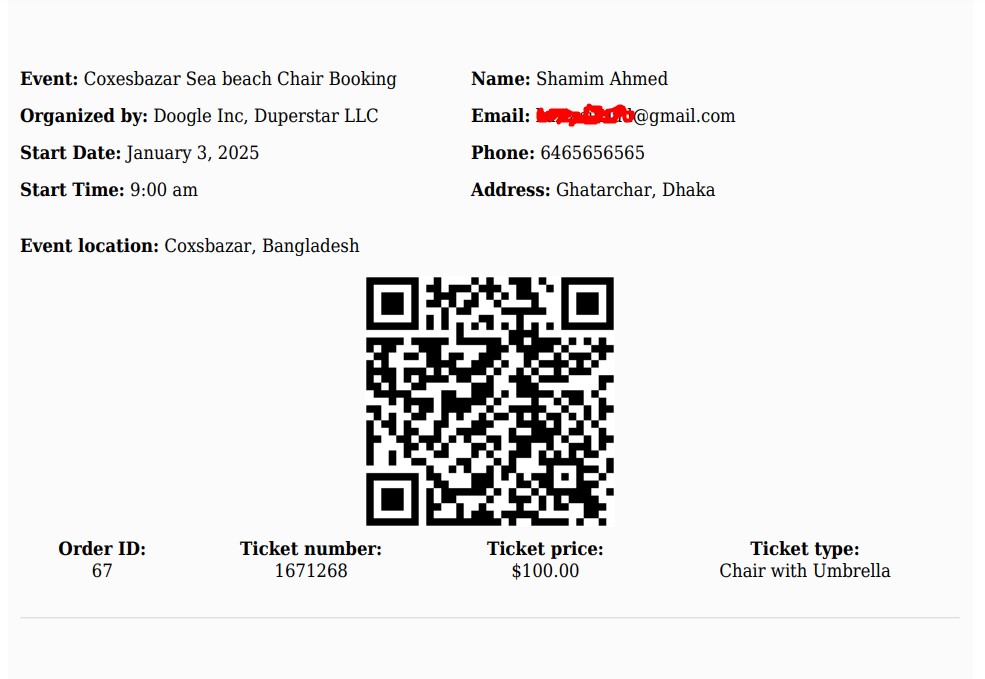
- Open the PDF on your phone. Confirm the QR code renders cleanly at a readable size and that the attendee name and ticket details print alongside it.
- Scan with the assigned role. Log in on the same phone as a user with the scanning role, scan the code, and verify the QR details page loads and identifies the right attendee.
- Complete the check-in. Tap check-in (or confirm it happened automatically, depending on your setting) and then check the attendee record in your dashboard to make sure the status updated.
- Try a second scan. Rescan the same code. A properly configured addon should not let the same ticket check in twice — this is the single most important test you can run.

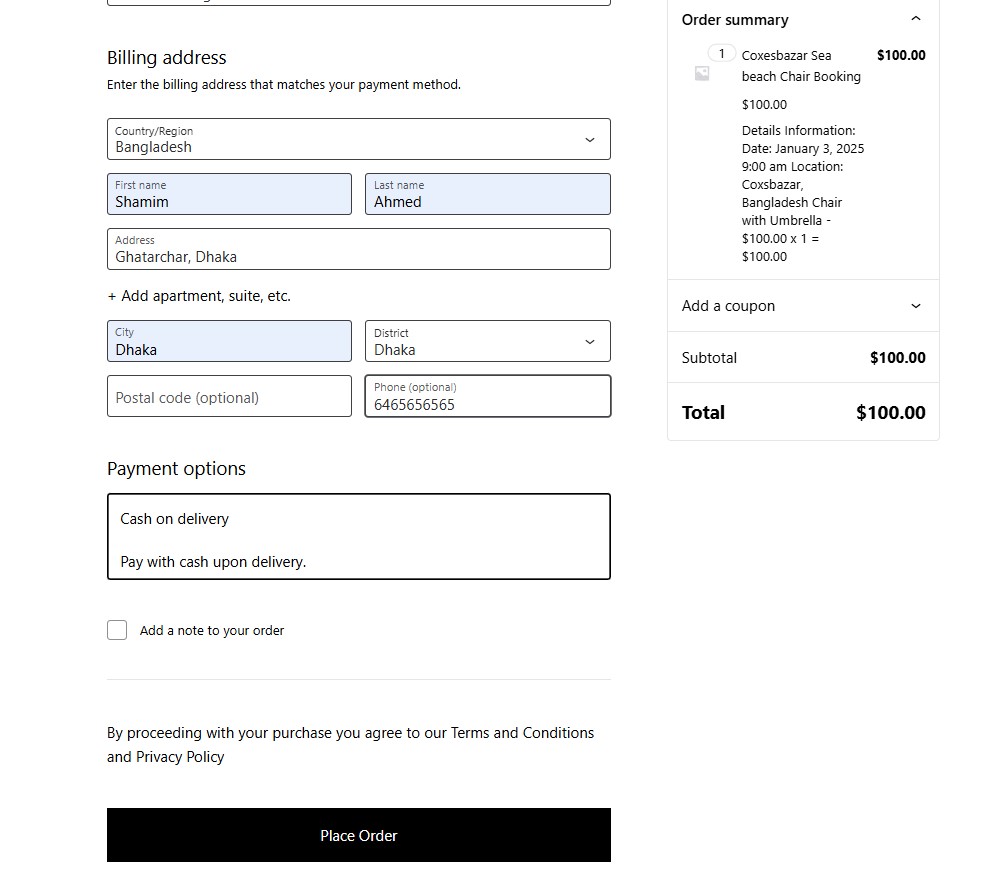
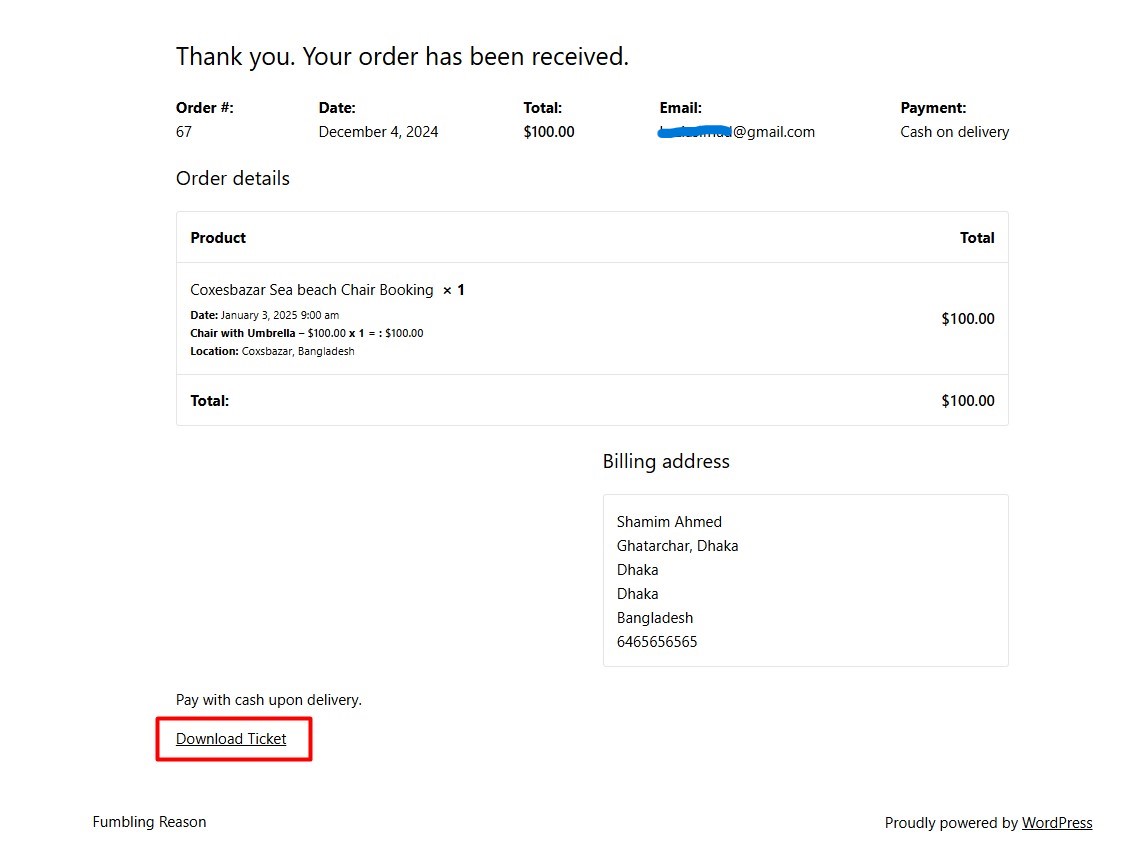
How does the QR code check-in work on event day?
Once configured, the flow is simple enough that volunteers can run it with two minutes of training.
Every order generates a PDF ticket with a unique QR code printed on it. The person responsible for scanning tickets — the ticket master — logs in on a smartphone, opens the QR details page, and scans the attendee’s code with the phone camera. The system reads the code, looks up the corresponding order and attendee, and returns one of two outcomes: a valid ticket, or a ticket that does not match or has already been used.
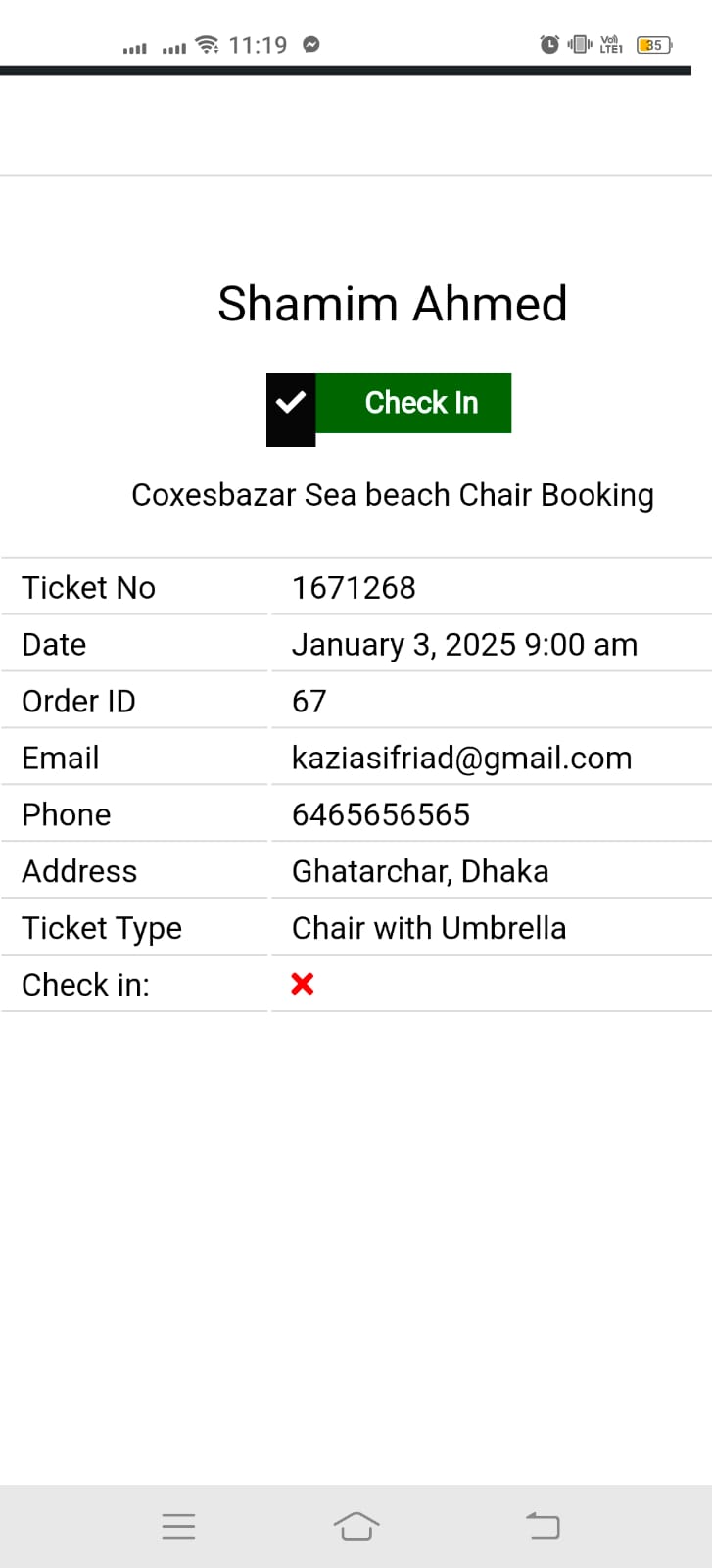
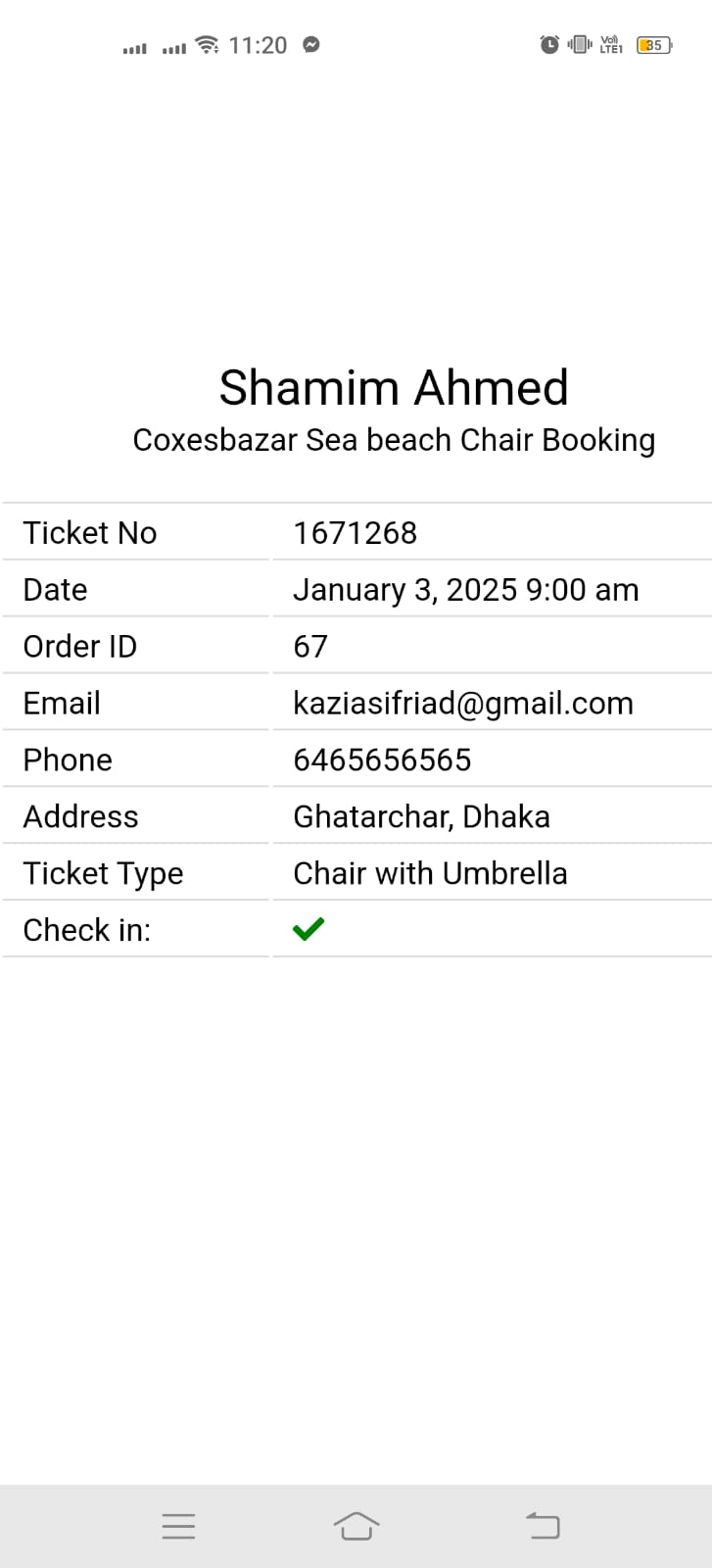
If manual check-in is enabled, the scanner sees a check-in button and taps it once the attendee is confirmed. With auto check-in on, the scan itself records the arrival. Either way, the attendee’s status updates in your dashboard in real time, so you know at any moment how many of your registered guests have arrived.
The screenshot below shows a PDF ticket with the printed QR code, exactly as an attendee would receive it by email.
After the ticket master scans the code, the check-in page opens on the phone with the attendee details and the check-in control.
Practical tips for the door
- Brightness first. Ask attendees to raise their phone screen brightness; most failed scans are glare or dim screens, not bad codes.
- Have a fallback. Keep one staff device with dashboard access so you can search an order manually if someone’s PDF will not load.
- Scan in offline-tolerant batches. Mobile data at venues is unreliable. Test your venue’s signal before the doors open and, if it is weak, arrange for a local hotspot at the entrance.
- Restrict scanning access. Only the role you selected can open the QR details page. Do not share an administrator login with door staff.
How QR check-in fits into your wider event setup
The QR code addon is one piece of a chain. It only generates useful tickets if your events, ticket products and checkout are already solid, so it is worth making sure the rest of the stack is in place:
- Booking and payments. Orders must complete cleanly for a ticket to exist. If your checkout flow needs work, read the complete WooCommerce event booking setup guide.
- Scheduling and discovery. Attendees need to find dates and times before they can buy. The guide to adding a calendar to your WooCommerce event website walks through the calendar addon, which sits naturally alongside QR ticketing.
- Email delivery. The QR code reaches attendees through the order email. If confirmations are unreliable, fix that before relying on ticket PDFs at the door.
- Quantity rules. If you limit tickets per order, make sure those limits are intentional — a family booking four seats should receive four scannable tickets, not one.
If you are weighing ticketing plugins more broadly, a comparison of the best event ticketing plugins for WooCommerce will help you see where native QR support and addon-based QR support differ. And if your bottleneck is not tickets but door logistics, the nearest adjacent topics in this cluster are seating plans and addon architecture — those guides cover different intents, so start there rather than re-reading setup steps you have already completed.
Should you enable auto check-in?
Auto check-in is best for high-volume, low-friction events — conferences, concerts, screenings — where speed matters more than individual verification. Manual check-in suits smaller or higher-stakes events where a staff member should glance at the attendee name, or where you hand out wristbands and want a deliberate confirmation step. You can change this setting between events, so there is no reason to commit to one permanently.
Common problems and fixes
| Problem | Likely cause | Fix |
|---|---|---|
| No QR Code Settings tab after activation | Base plugin is not the Pro version, or addon licence is inactive | Confirm WpEvently Pro is active and the addon licence is registered |
| Ticket PDF has no QR code | QR code not enabled in settings | Enable QR codes in QR Code Settings and regenerate a test order |
| Scanner cannot open the QR details page | User role not selected, or scanner uses the wrong account | Assign the scanning role in settings and log in with that account |
| Code will not scan | Screen glare, low brightness, or code printed too small | Increase phone brightness; check the PDF output size in a print preview |
| Attendee checks in twice | Duplicate order or a manual override | Search the order in the dashboard and reconcile the attendee record |
For a deeper look at what the addon adds to WpEvently overall, the WooCommerce Event Manager plugin overview describes the core plugin features that the QR addon extends.
Wrapping up
You now know how to set up a QR code addon for an event end to end: confirm the Pro event manager is active, download and upload the addon ZIP, activate it, enable QR codes in the settings panel, assign the scanning role, and place a test order to prove the whole chain works before the doors open.
The payoff is a door that moves quickly, tickets that are difficult to fake, and check-in data you can actually use afterwards. Because the addon plugs directly into your existing event and WooCommerce setup, you are extending a system you already run rather than adding another platform to maintain. Install it, run one test scan, and your next event can go live with QR ticketing.
