 Get BlackFriday 25% for Limited Time on Lifetime & 35% for Bundle Deal


Geofencing in the eCab taxi plugin lets you draw a virtual boundary on a map and decide which vehicles serve it, what the ride costs inside it, and how intercity trips are priced. This guide walks you through the whole setup on a live WordPress site: installing the free plugin, activating the Pro modules that unlock geofences, drawing a single operation area, drawing an intercity zone, and attaching each one to the right taxi. Every step below is a screen in the plugin — no custom code is involved.
If you want the bigger picture first — what geofences are, how they price rides and why operators use them — read the explanation sections below before you start clicking. If you already know why you need zones and just want the configuration walkthrough, skip straight to the setup steps.
- What Is Geofencing in a Taxi Booking System?
- Before You Start: What You Need
- Step 1: Install the Free eCab Taxi Booking Plugin
- Step 2: Activate eCab Pro and the Geofencing Modules
- Step 3: Draw a Single Operation Area Geofence
- Step 4: Attach the Geofence to a Taxi
- Step 5: Set Up an Intercity Geofence
- Single Operation vs Intercity Geofence: Which Do You Need?
- Troubleshooting Geofencing in eCab
- Best Practices for Managing Zones at Scale
- Conclusion
What Is Geofencing in a Taxi Booking System?
A geofence is a virtual border drawn on a map using GPS coordinates. Instead of tracking a single address, the booking system tracks the area inside that border. When a customer enters a pickup and drop-off that both fall inside a zone, the plugin applies the rules attached to that zone. When one of the points falls outside, the rule does not apply.
In a taxi booking plugin, geofences usually control three things:
- Service availability — only vehicles assigned to a zone can be booked inside it, so you do not send a city car to an area it does not cover.
- Pricing — a zone can carry its own fare rules, including surge, fixed or percentage adjustments for trips inside or between areas.
- Routing logic — intercity zones define which origin–destination pairs are supported, and in which direction.
Mordor Intelligence’s analysis of the active geofencing market makes the operational case plainly: geofences help taxi apps know where vehicles are, shorten pickup times, and trigger location-based offers near airports and other landmarks. That combination of faster dispatch and better-targeted marketing is why zoning has moved from a nice-to-have to a standard item on taxi software checklists.
Why operators use geofenced operation areas
- Traffic and municipal compliance — keep pickups and drop-offs inside permitted areas rather than across a whole metro region.
- Demand-based fares — attach surge or a zone multiplier where demand is highest instead of raising prices everywhere.
- Cleaner fleet allocation — assign each car to the areas it actually serves, which cuts dead mileage.
- Directional intercity pricing — charge differently for the outbound and return leg of a long-distance route.
How zoning behaves on the front end
From the customer’s side, the experience stays simple. They pick a date, time, pickup and drop-off. The plugin checks those coordinates against your published zones and only returns vehicles whose operation area matches. If your configured car is outside the zone, it simply will not appear in the results — which is the whole point, and the test we run in the walkthrough below.
If you are starting from zero and have not built the booking pages yet, our step-by-step guide to making a taxi booking website in WordPress covers the site structure and vehicle setup that this article assumes.
Before You Start: What You Need
- The free eCab plugin. Install Taxi Booking Manager — eCab from the WordPress plugin directory. Geofence screens live in the Pro extension, so the free version alone is not enough.
- WooCommerce, installed and active. eCab uses WooCommerce to process bookings and payments.
- A Google Maps API key. Without one, your maps will not render or geocode accurately, and zone drawing depends on the map. Enable the Maps JavaScript API and the geocoding/places services your setup needs in the Google Cloud console. Google bills Maps usage on its own pricing, so check current pricing before you go live.
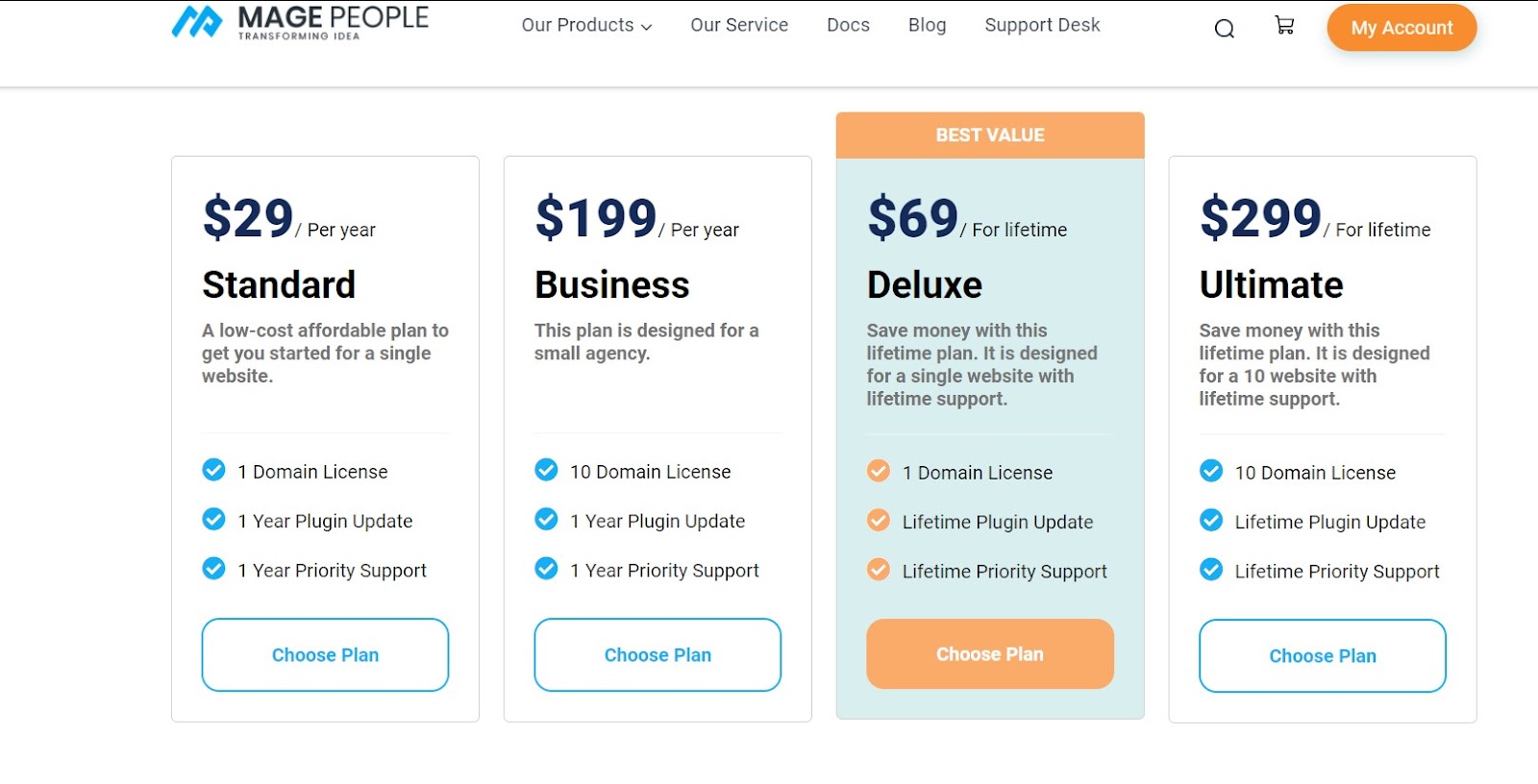
- The eCab Pro package. Check current pricing on the plugin page; we do not repeat figures here because licence terms change.
- At least one vehicle configured under All Transportation, so you have something to attach a zone to.
A quick planning note: sketch your zones on paper first. Decide whether each one is a single-city area or an intercity corridor pair, and which vehicles belong to each. Once you start joining dots on a satellite map, that plan saves a lot of redrawing.
Step 1: Install the Free eCab Taxi Booking Plugin
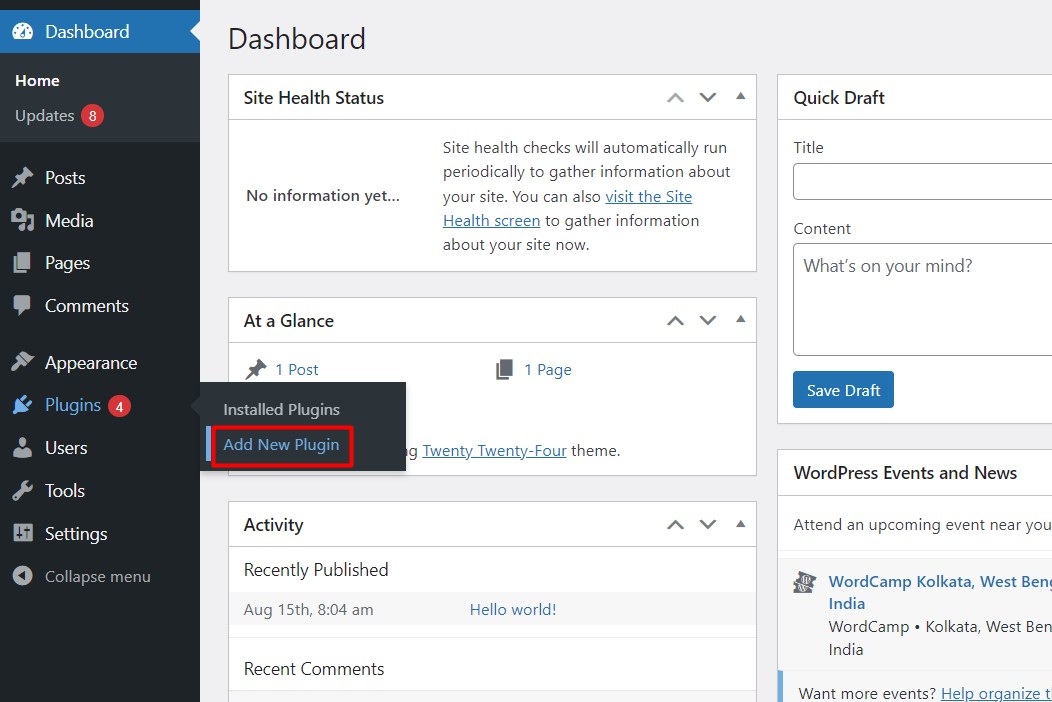
Log in to your WordPress dashboard and go to Plugins → Add New Plugin. Search for “Taxi” and the eCab plugin appears at the top of the results.
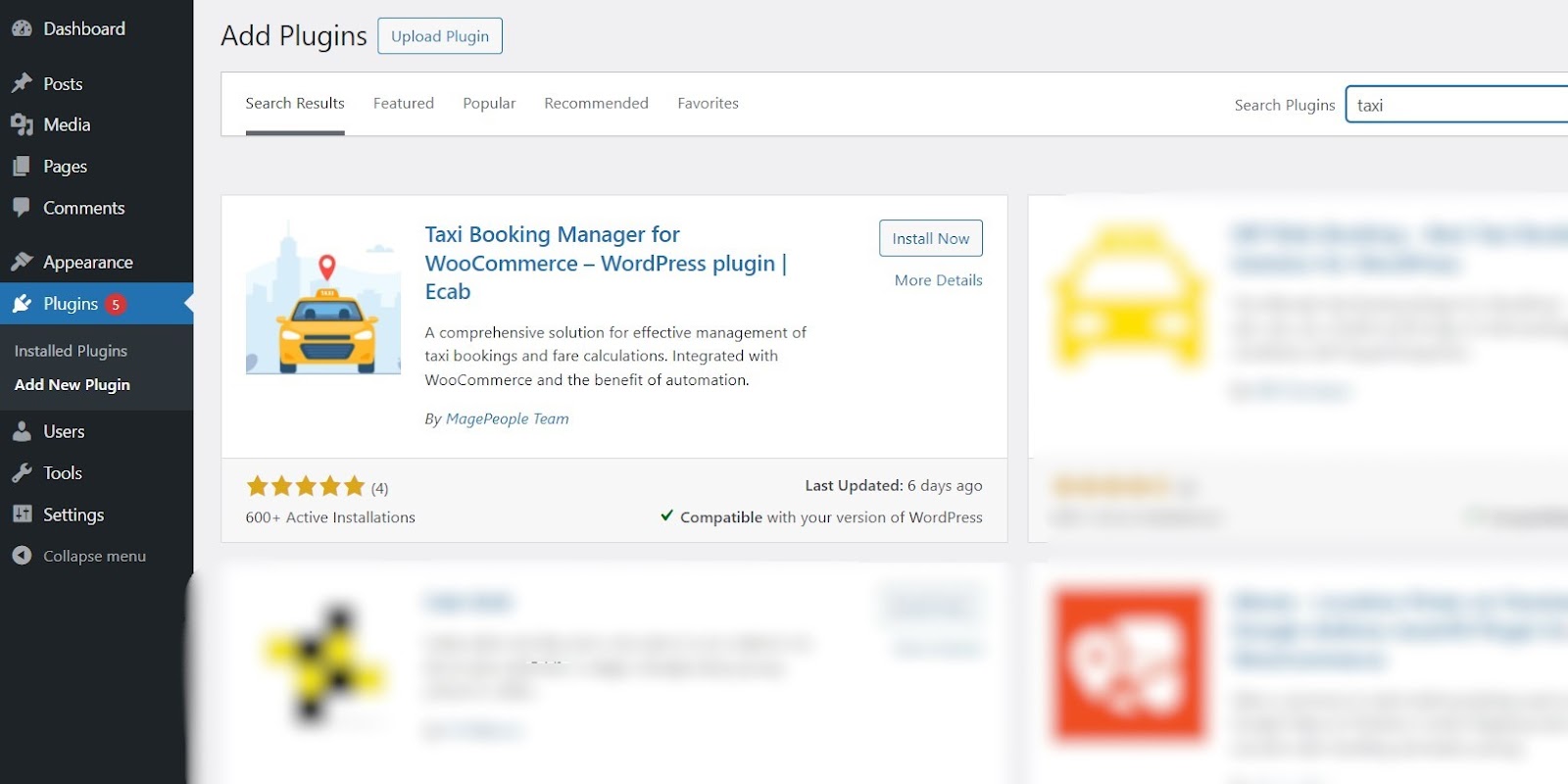
Confirm you are installing the official listing before you continue.
Install and activate it. You can also upload the plugin zip under Plugins → Add New → Upload Plugin if you prefer a manual install.
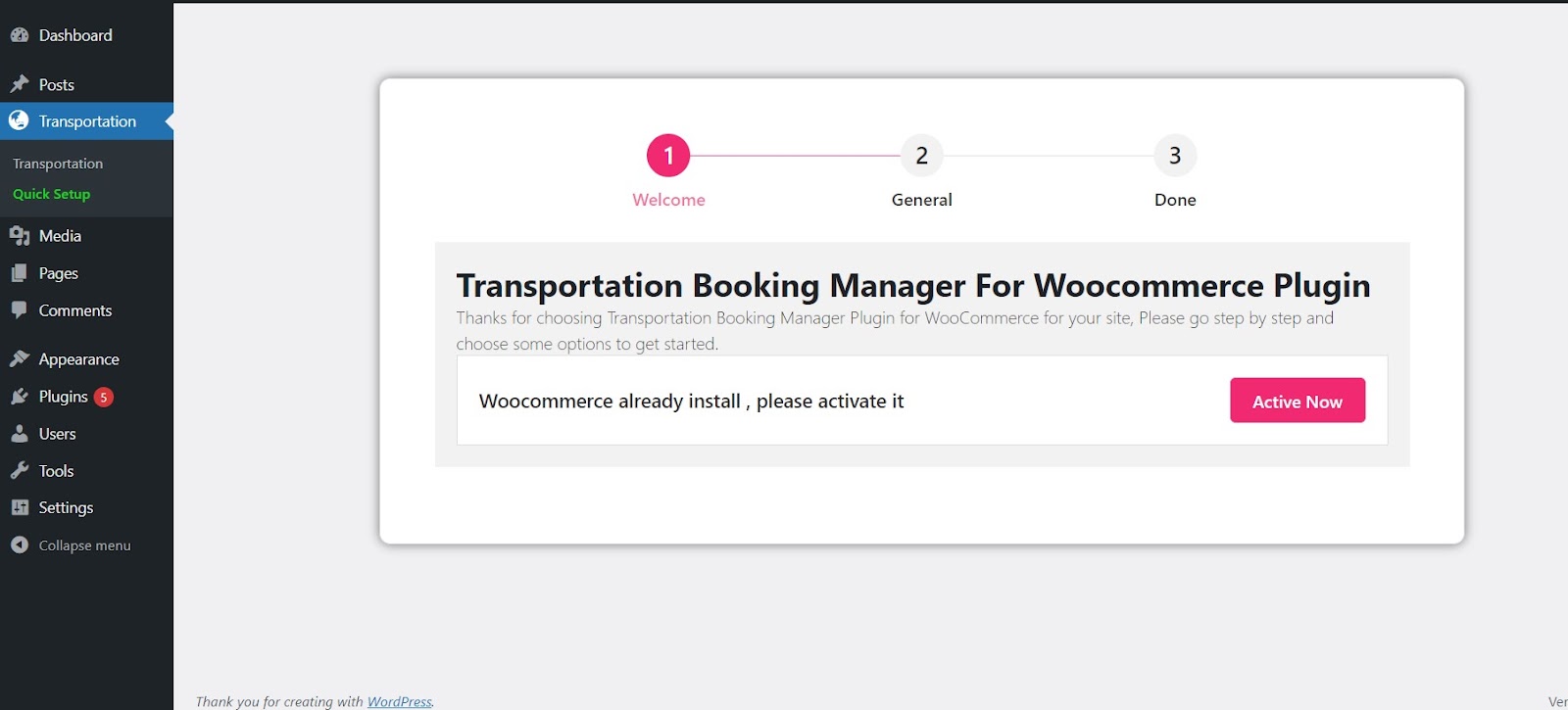
Activation starts a setup wizard. Follow it through: it creates the pages and menus the booking flow needs. If WooCommerce is not yet installed, the wizard will prompt you to install and activate it first — do that, then resume the wizard. Click Finish when the last step completes.
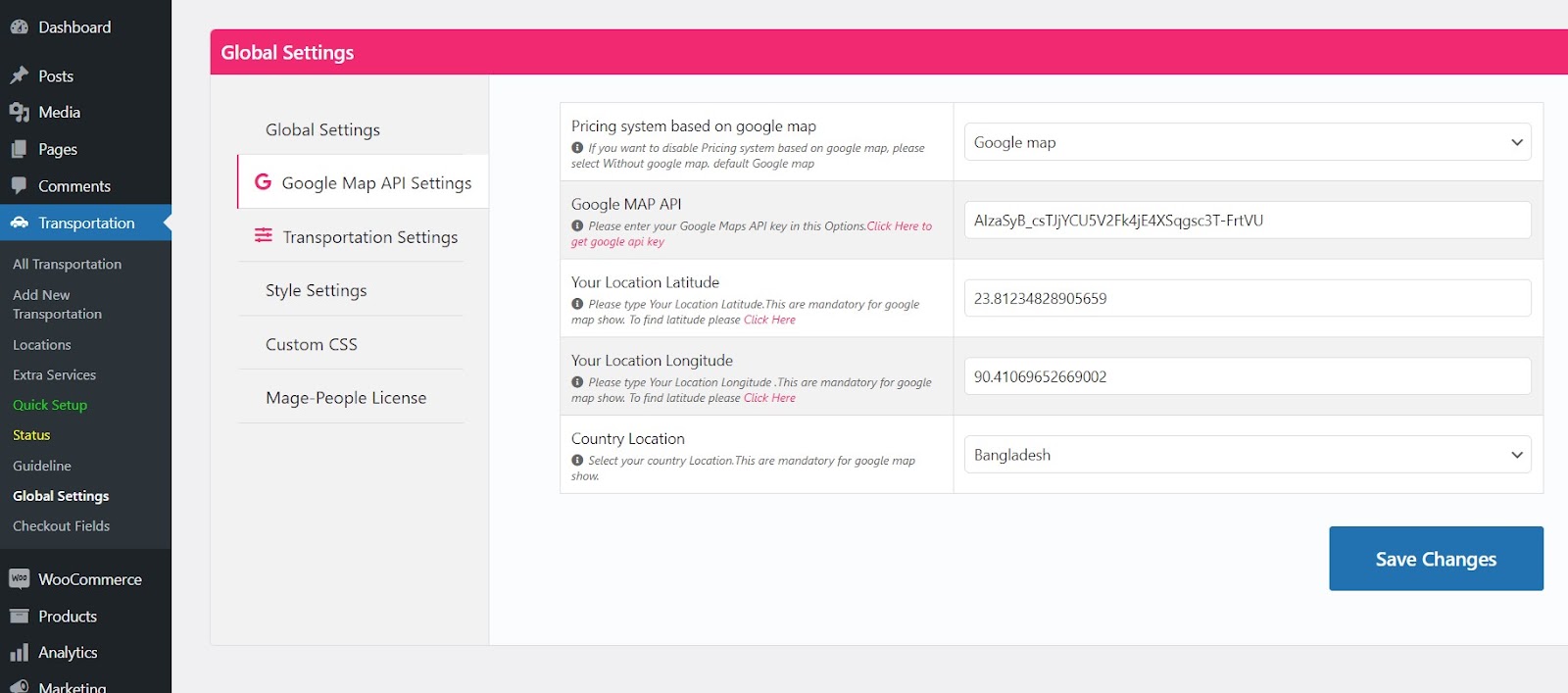
Next, go to Transportation → Global Settings → Google Map API Settings, paste your key and save. Return to this screen and re-check it any time the map stops loading on the front end.
The free plugin now runs a working taxi site. What it does not yet include is the Operation Areas module, and that is where geofencing lives.
Step 2: Activate eCab Pro and the Geofencing Modules
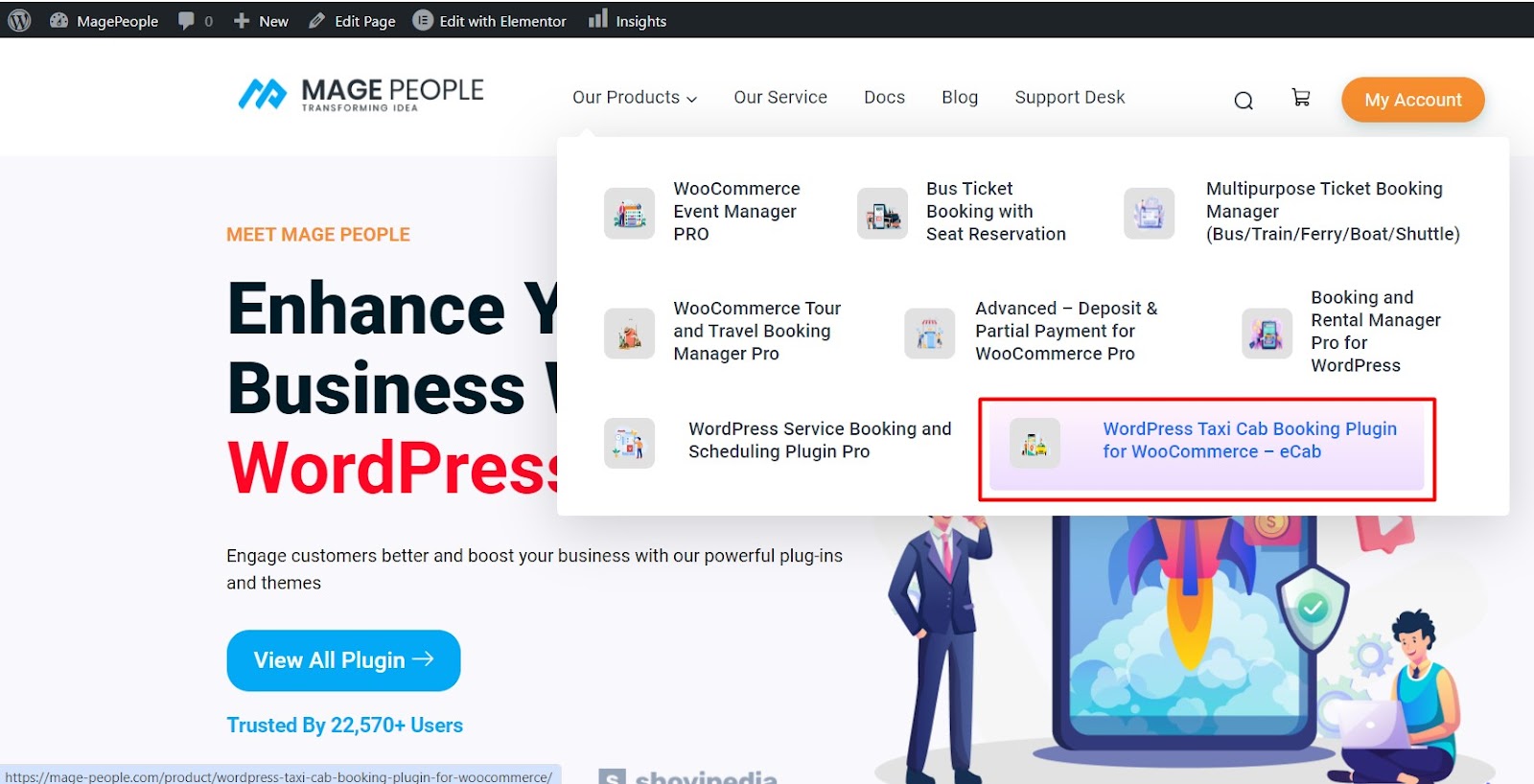
From your dashboard go to MagePeople → Our Products → WordPress Taxi Cab Booking Plugin and choose the package that matches your fleet size and support needs. Check current pricing on the product page before purchasing.
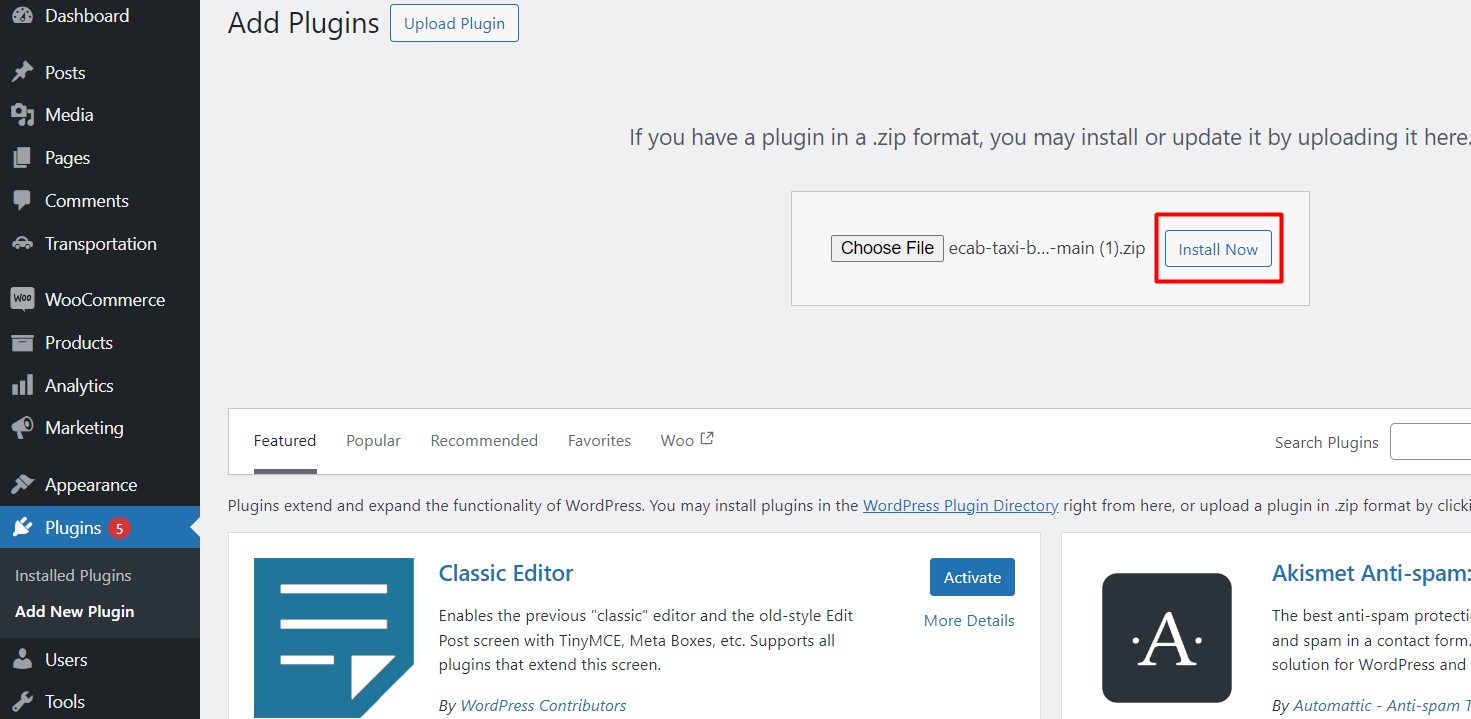
Download the Pro zip from your account, then go to Plugins → Add New → Upload Plugin, choose the file and click Upload Plugin.
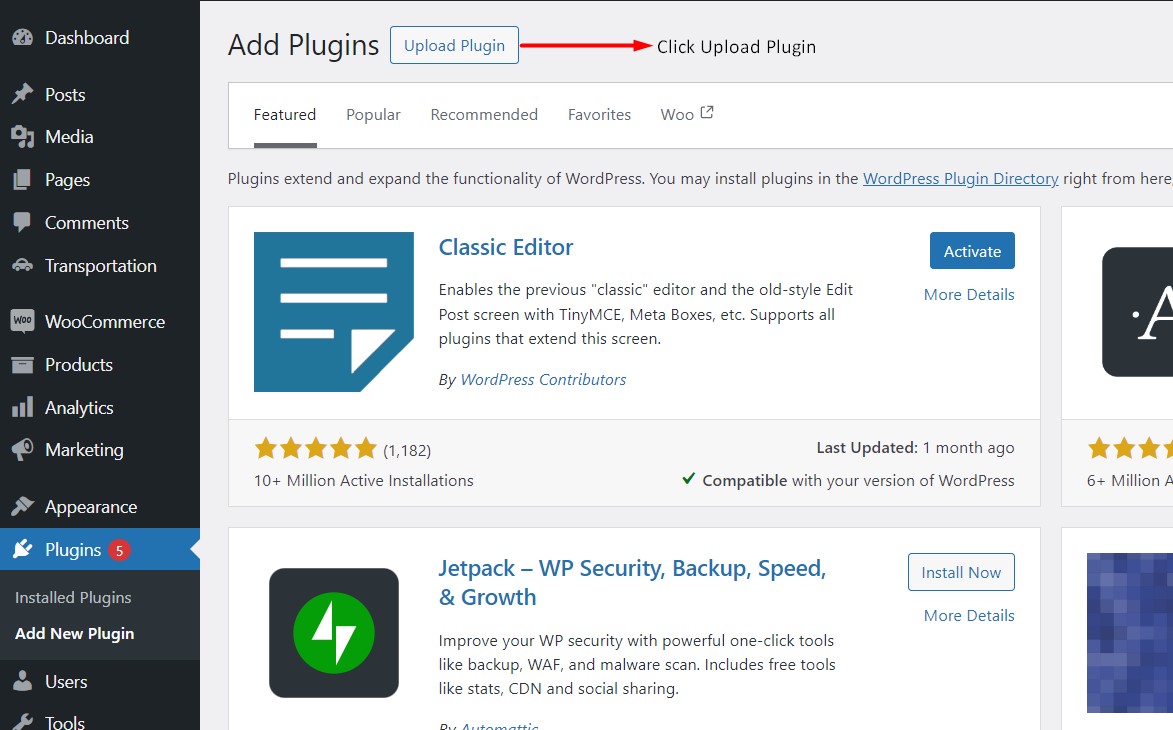
Click Install Now, then activate.
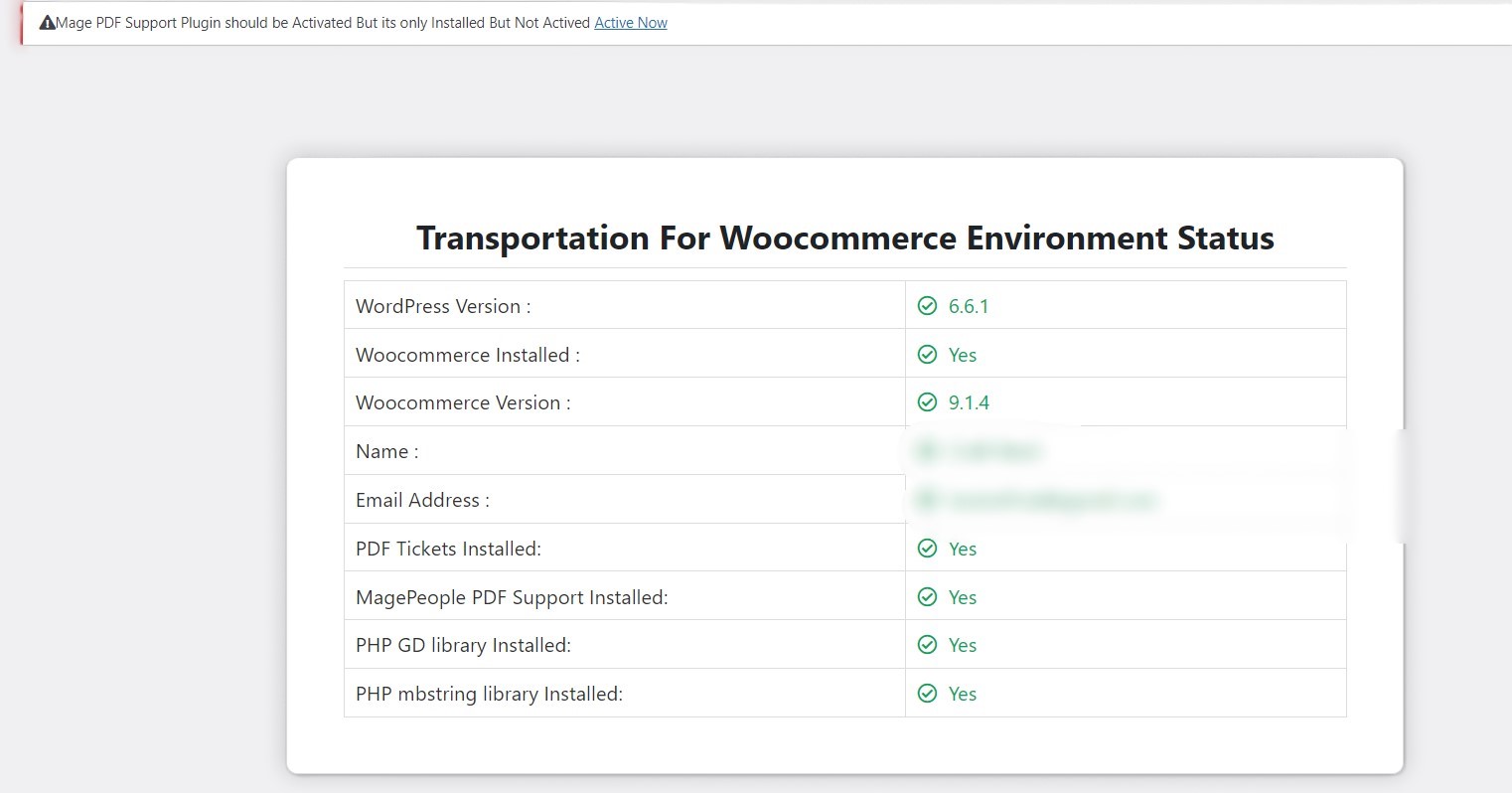
On activation, the plugin asks which optional modules to enable. Turn on the ones you intend to use — including the PDF ticket module, which is the prompt you will see first. Enable only what you need; you can return to this screen and add modules later.
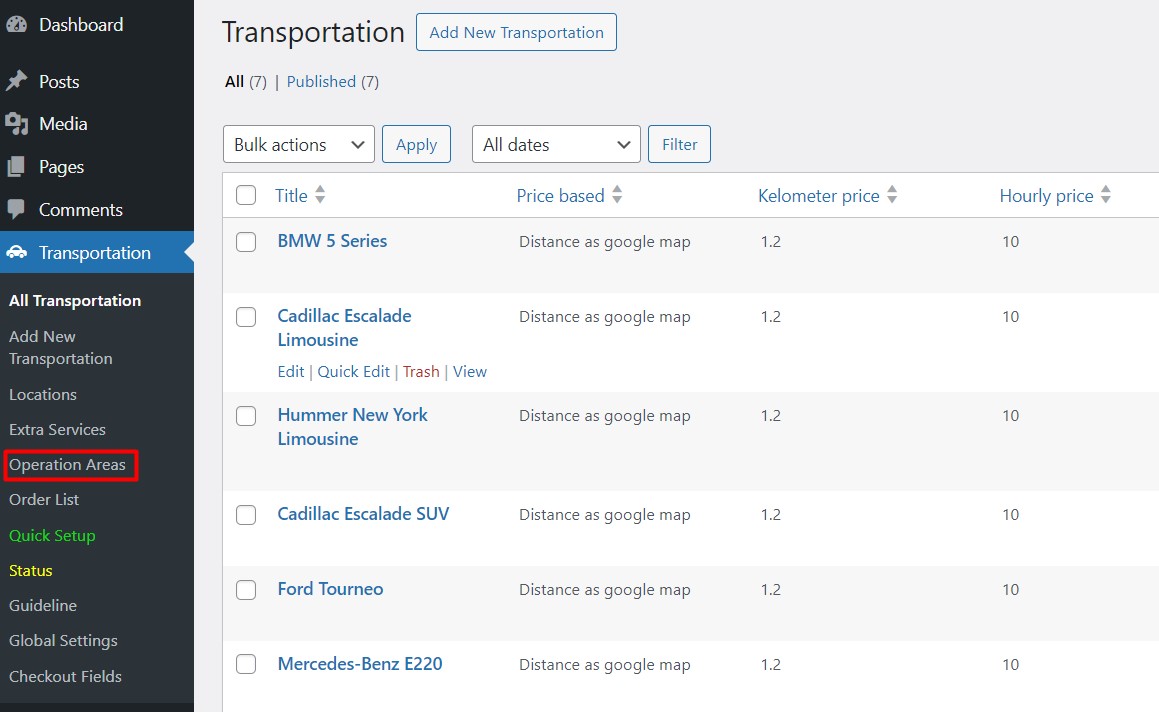
With the Pro plugin active, a new Operation Areas menu appears in the dashboard. That menu is the geofencing control panel.
Step 3: Draw a Single Operation Area Geofence
A single operation area covers trips where pickup, drop-off, or both sit inside one zone — the typical urban setup. Open Operation Areas and click Add New.
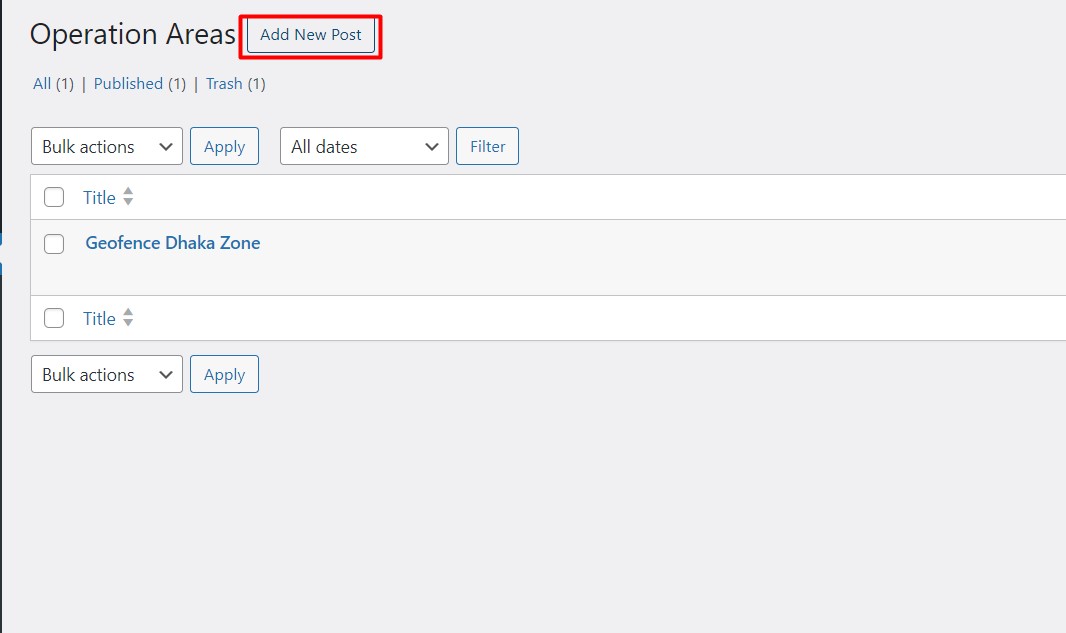
The editor offers two operation types: Single Operation and Intercity. You can build as many zones of each type as your business needs. Start with a single operation area.
Give the zone a name your team will recognise (for example the neighbourhood or city district), choose Single Operation Area as the type, and enter the starting location so the map centres on the right place.
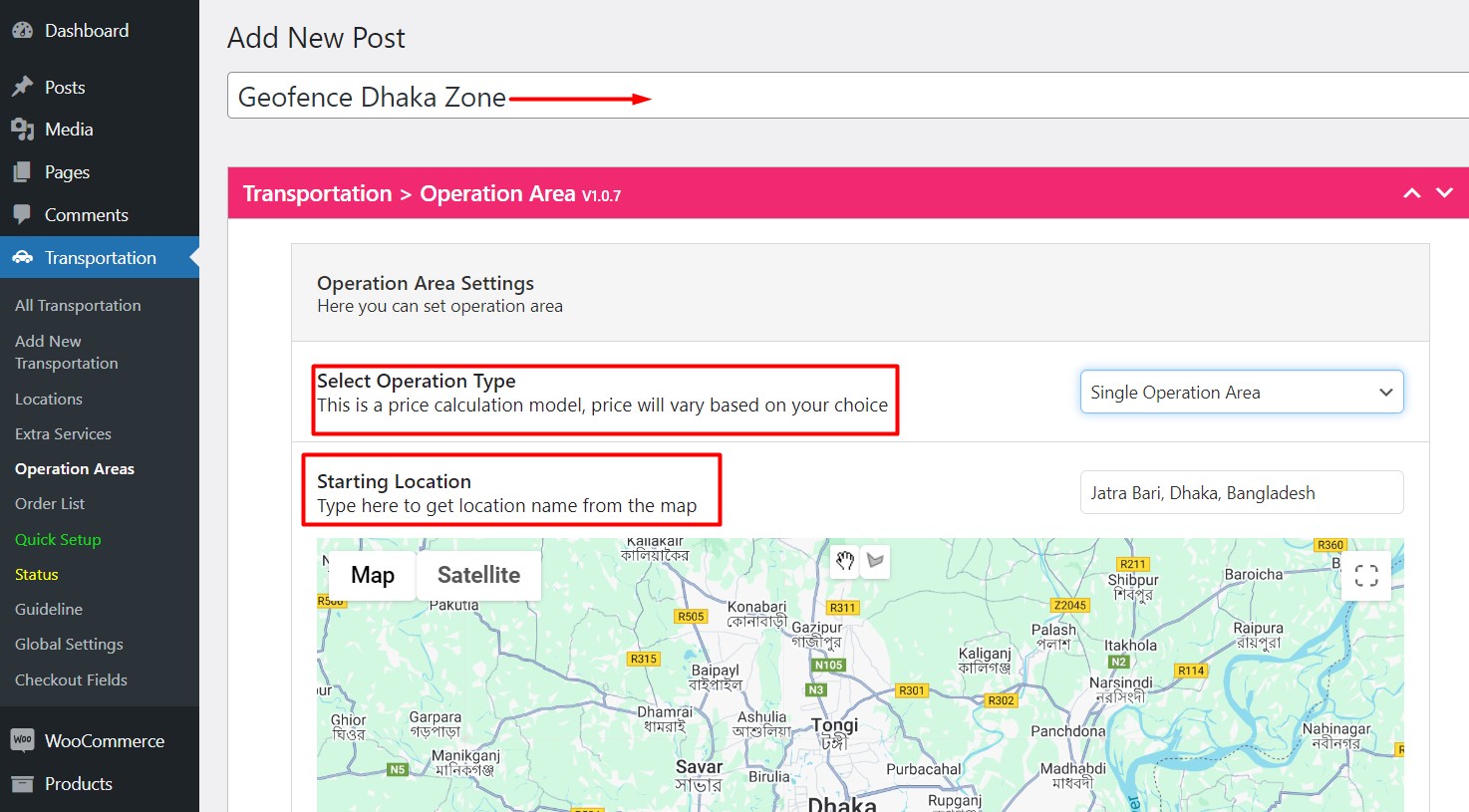
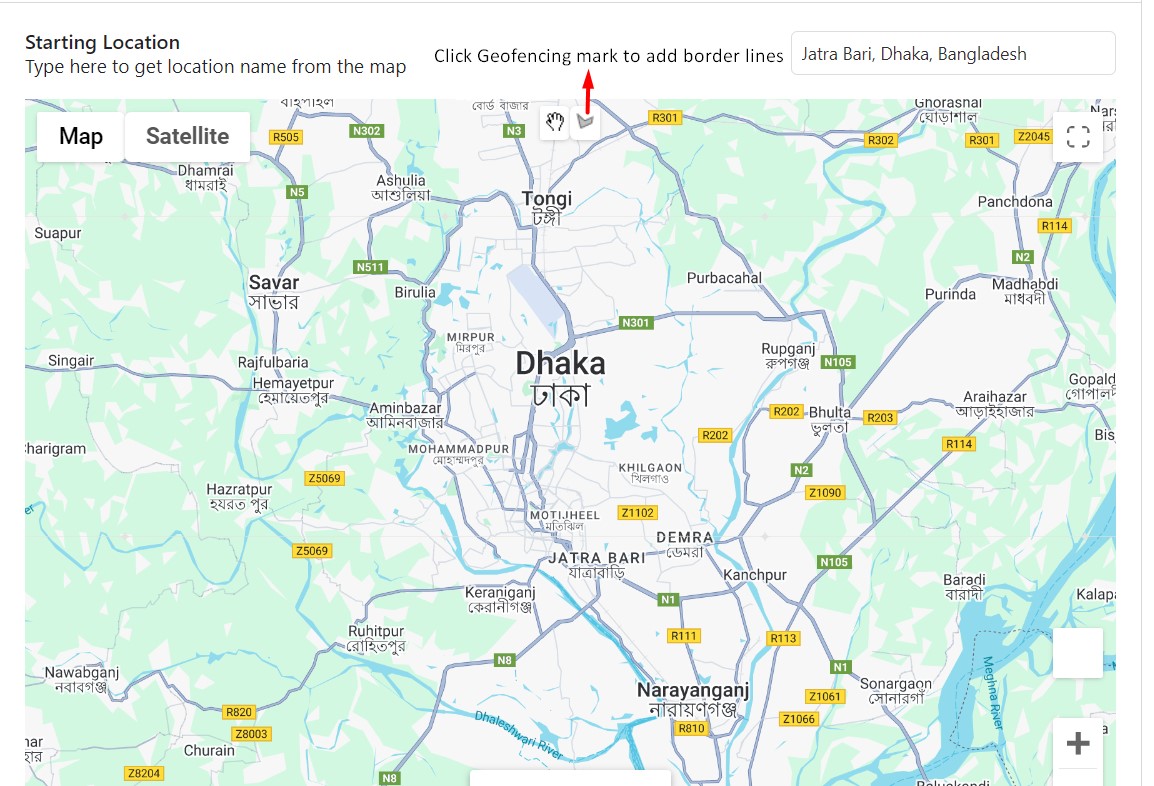
Click the geofence tool to start adding boundary points.
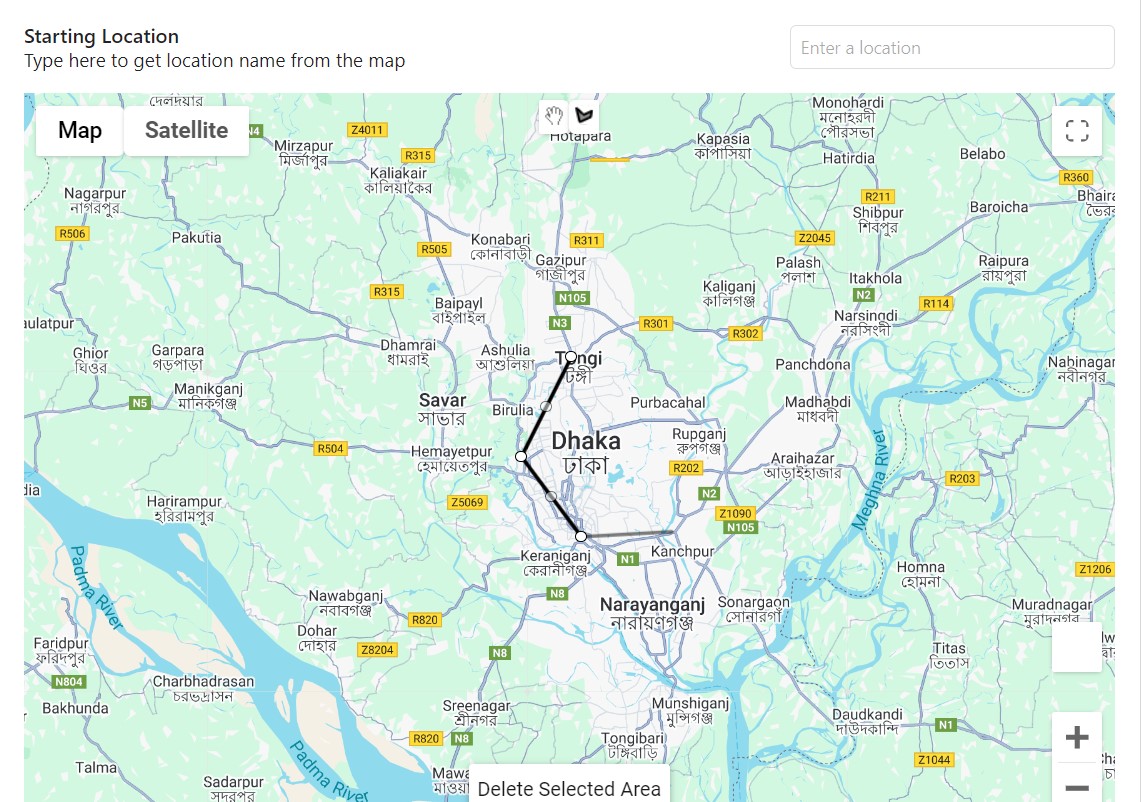
Now click each corner of the area you want to cover. Work around the perimeter in one direction, closing the shape so the boundary overlaps at the start and end. A precise boundary matters more than a large one — the plugin tests coordinates against this shape.
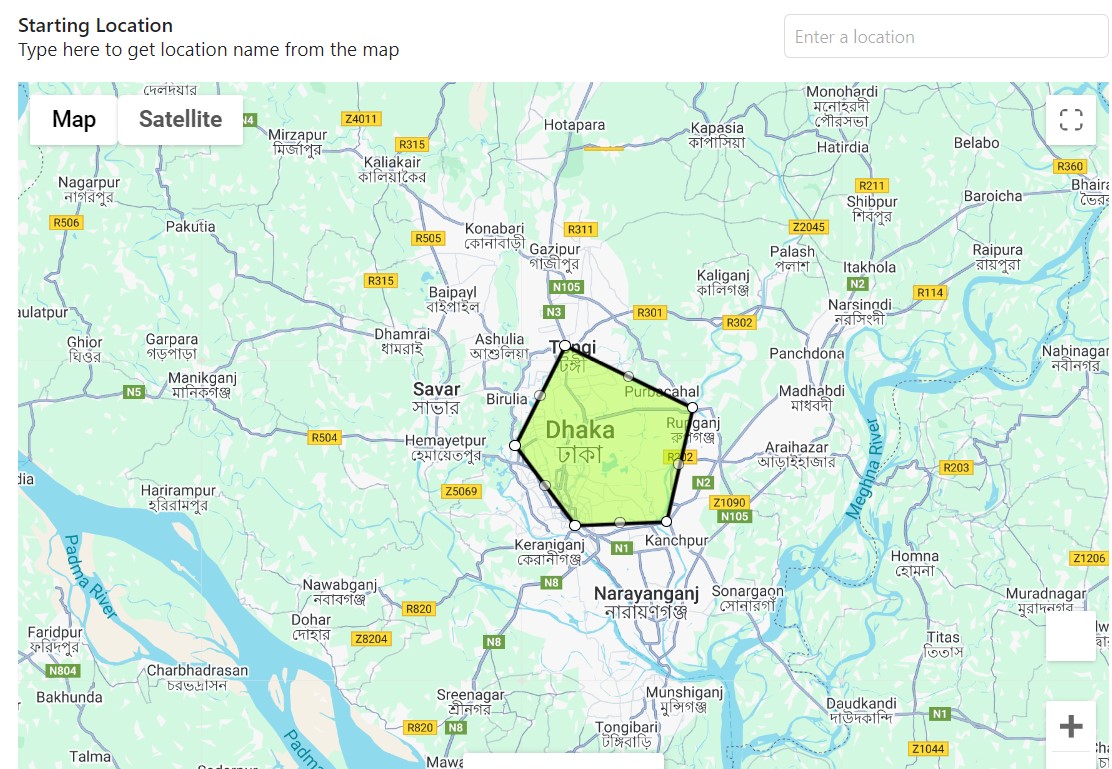
When your shape covers the intended area, publish the zone.
Choosing good zone boundaries
- Follow real geography. Rivers, ring roads and municipal lines are easier to reason about than arbitrary rectangles.
- Overlap deliberately at borders. If two zones meet, leave a small overlap so a pickup on the boundary is not rejected by both.
- Keep zones readable. Very complex shapes with dozens of points are harder to maintain than three or four simpler polygons.
- Revisit after road changes. New flyovers and one-way systems change what counts as an accessible pickup.
Step 4: Attach the Geofence to a Taxi
Creating a zone does not assign it. Go to All Transportation and open the vehicle you want to serve this area.
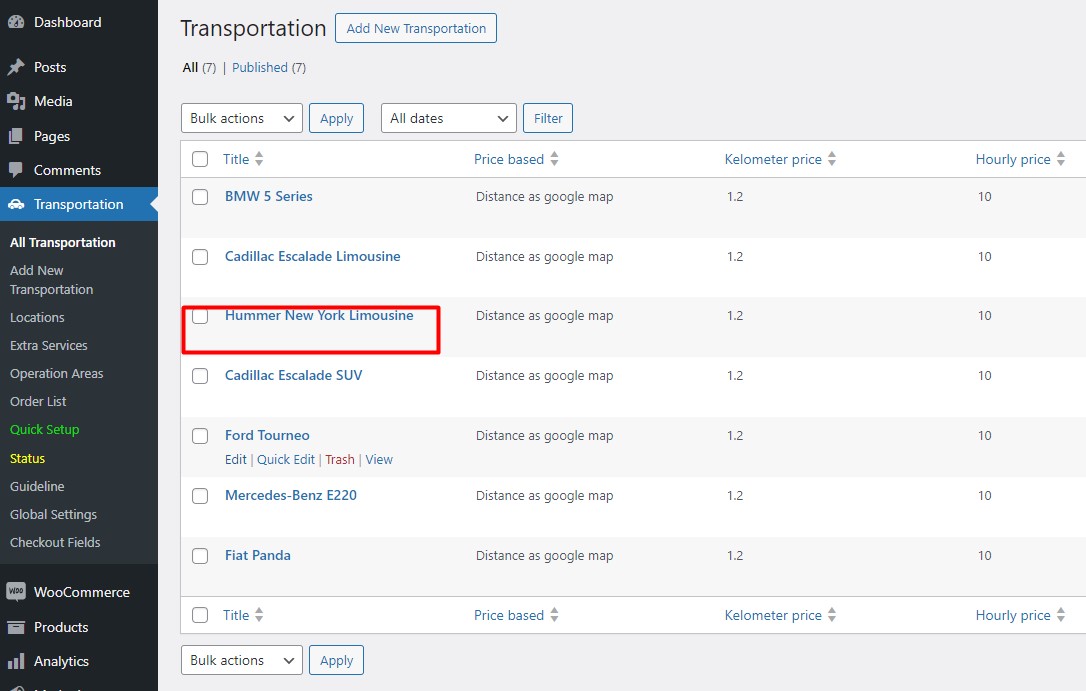
In the vehicle settings, find Operation Area and select the single operation geofence you just published. Save with Update.
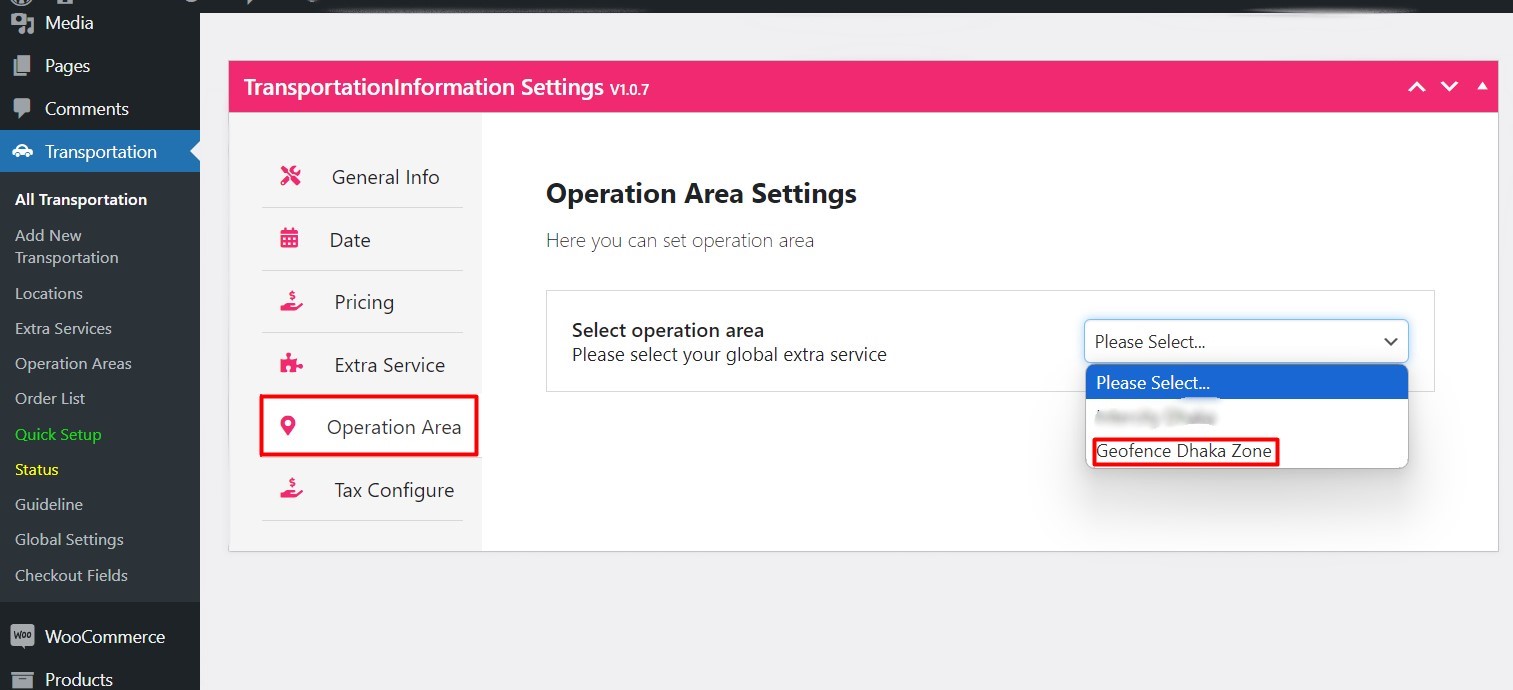
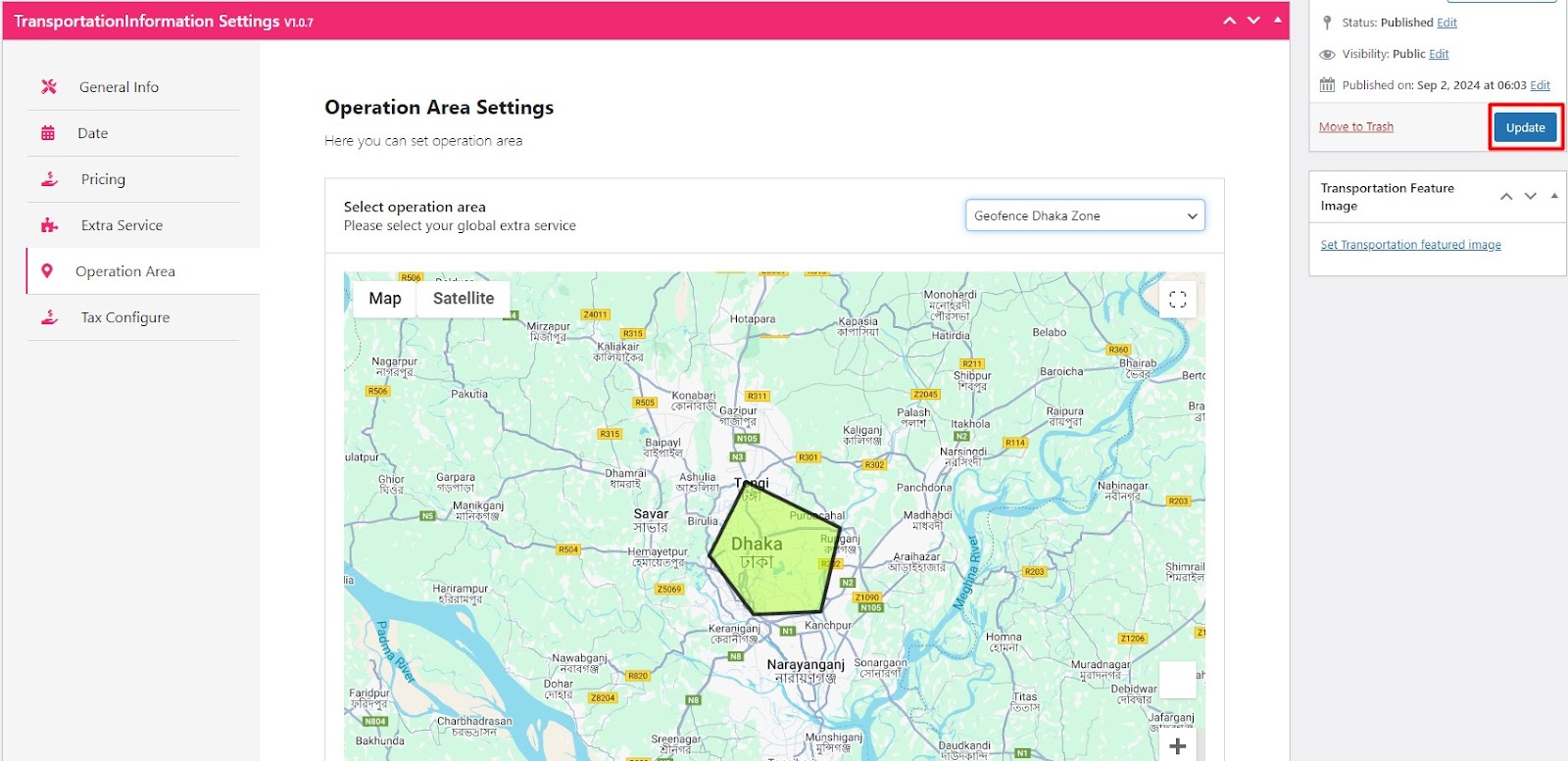
Repeat for every vehicle that should operate in that zone. A vehicle with no operation area selected is treated as unsupervised — check each listing before you go live.
Test the zone from the customer’s side
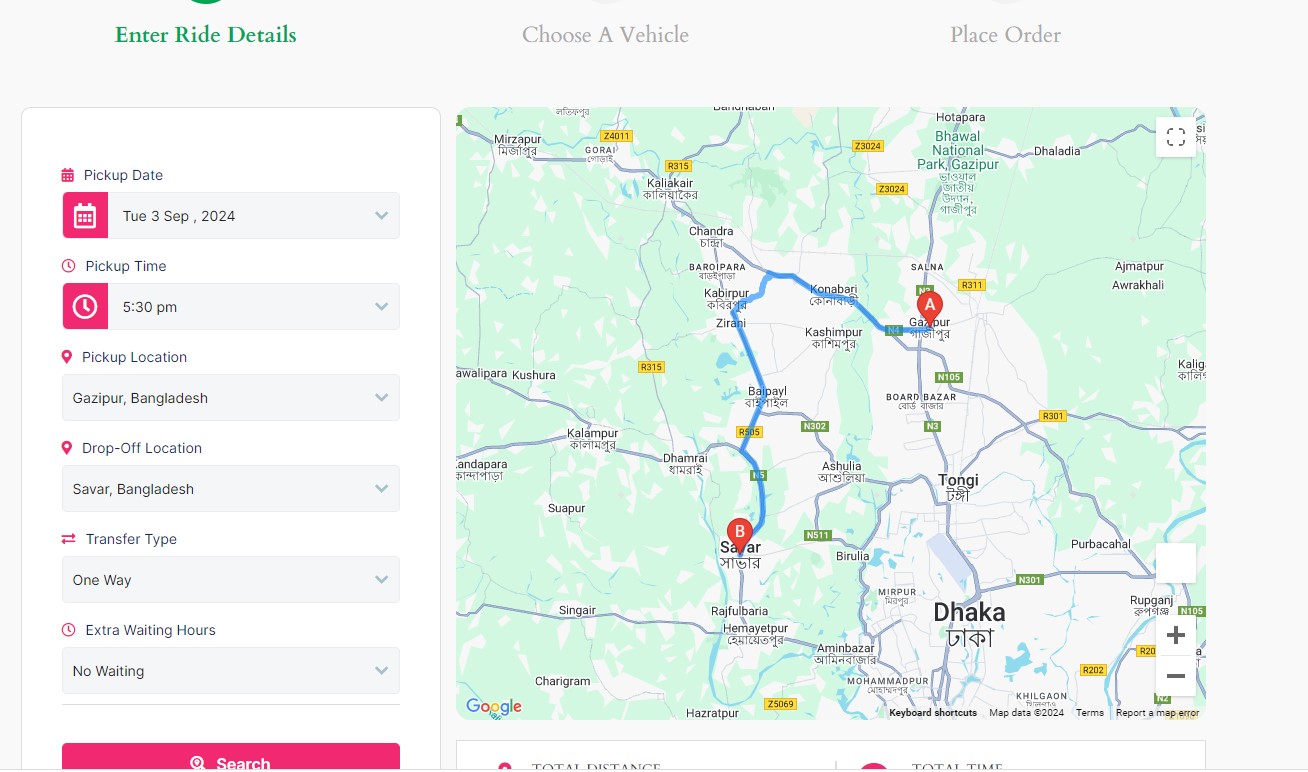
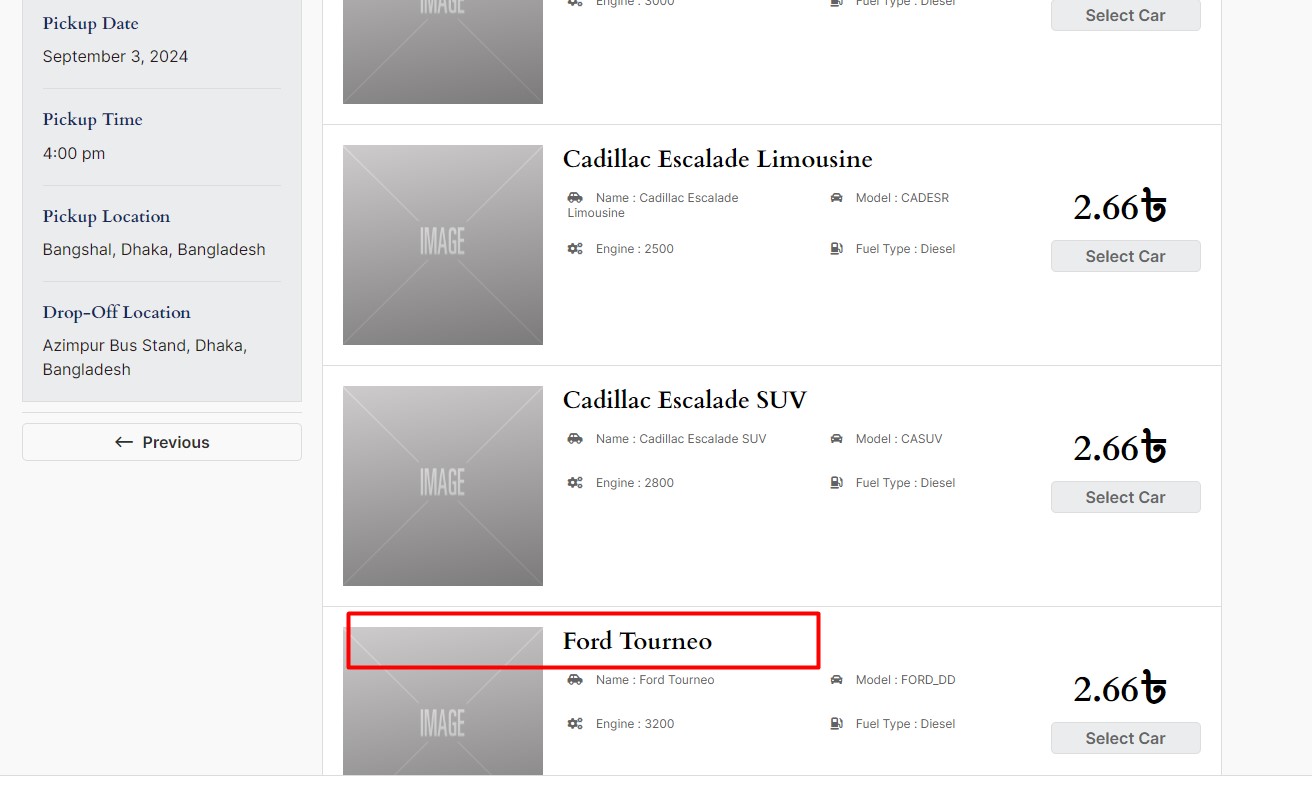
Open your booking site, choose a date and time, then enter a pickup and drop-off that both sit inside the zone. Run the search.
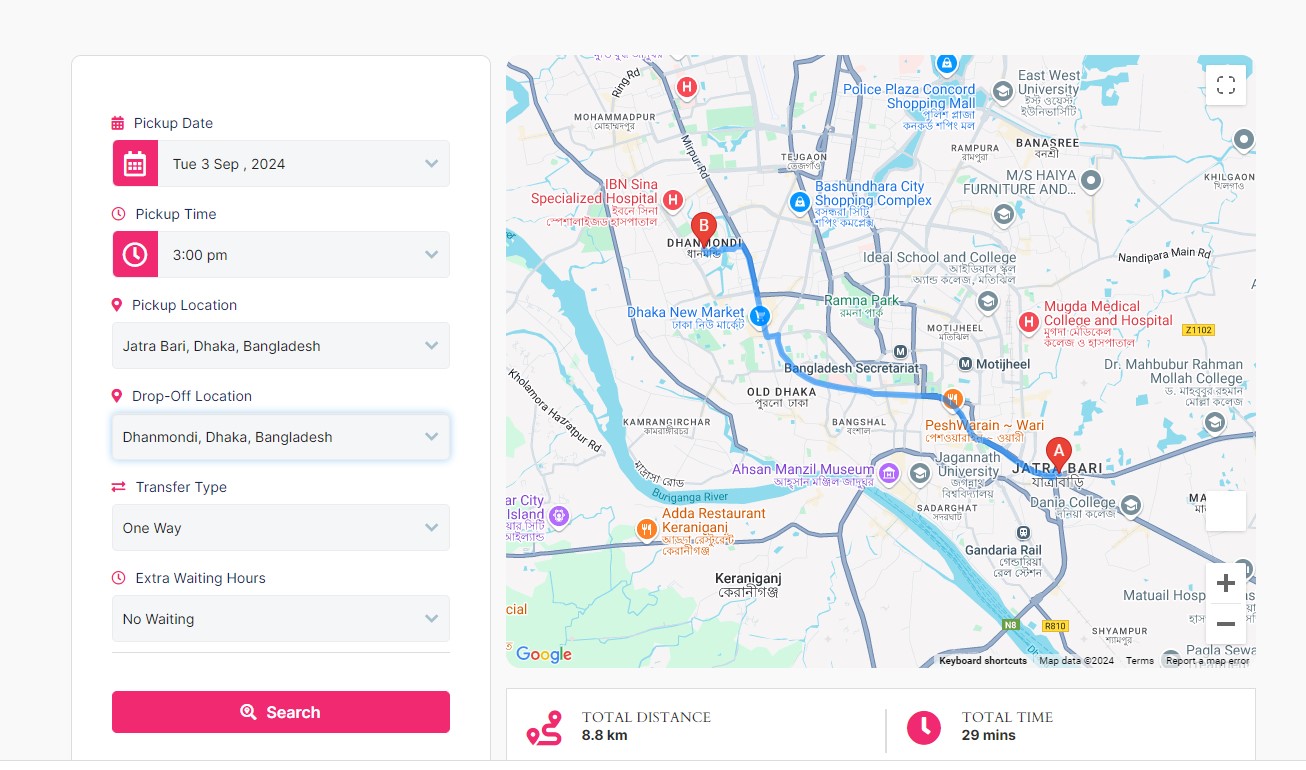
The vehicle you assigned should appear in the results with its fare.
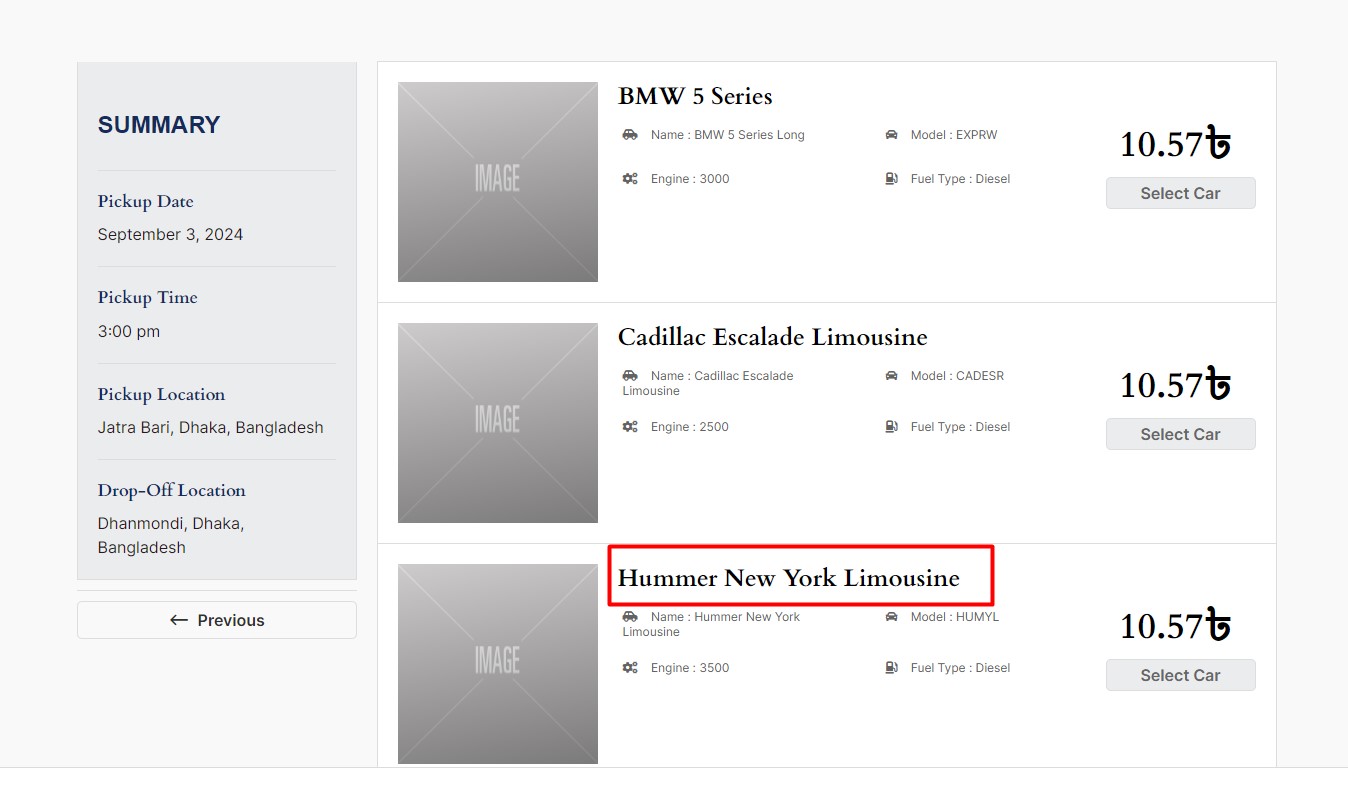
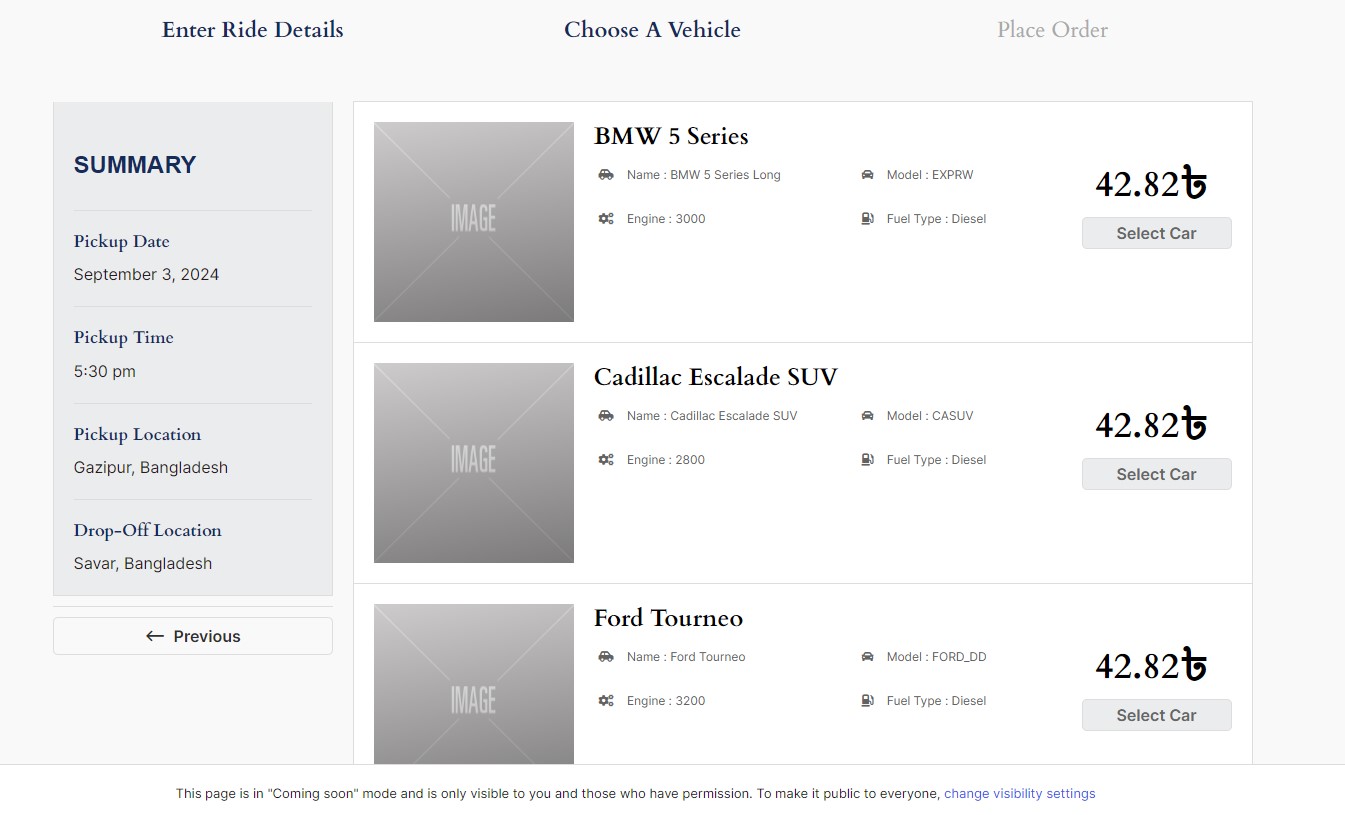
Now repeat the search using a point outside the boundary.
The same vehicle should be missing from the results. That disappearance is the confirmation that the fence is working — if the car still shows up, reopen the vehicle and check the Operation Area field saved correctly.
Step 5: Set Up an Intercity Geofence
Intercity zones handle point-to-point trips between two distinct areas — for example, a city centre and a satellite town. Return to Operation Areas → Add New, name the route, and set the operation type to Intercity Operation Area. Then draw a zone around each end of the journey: an origin area and a destination area.
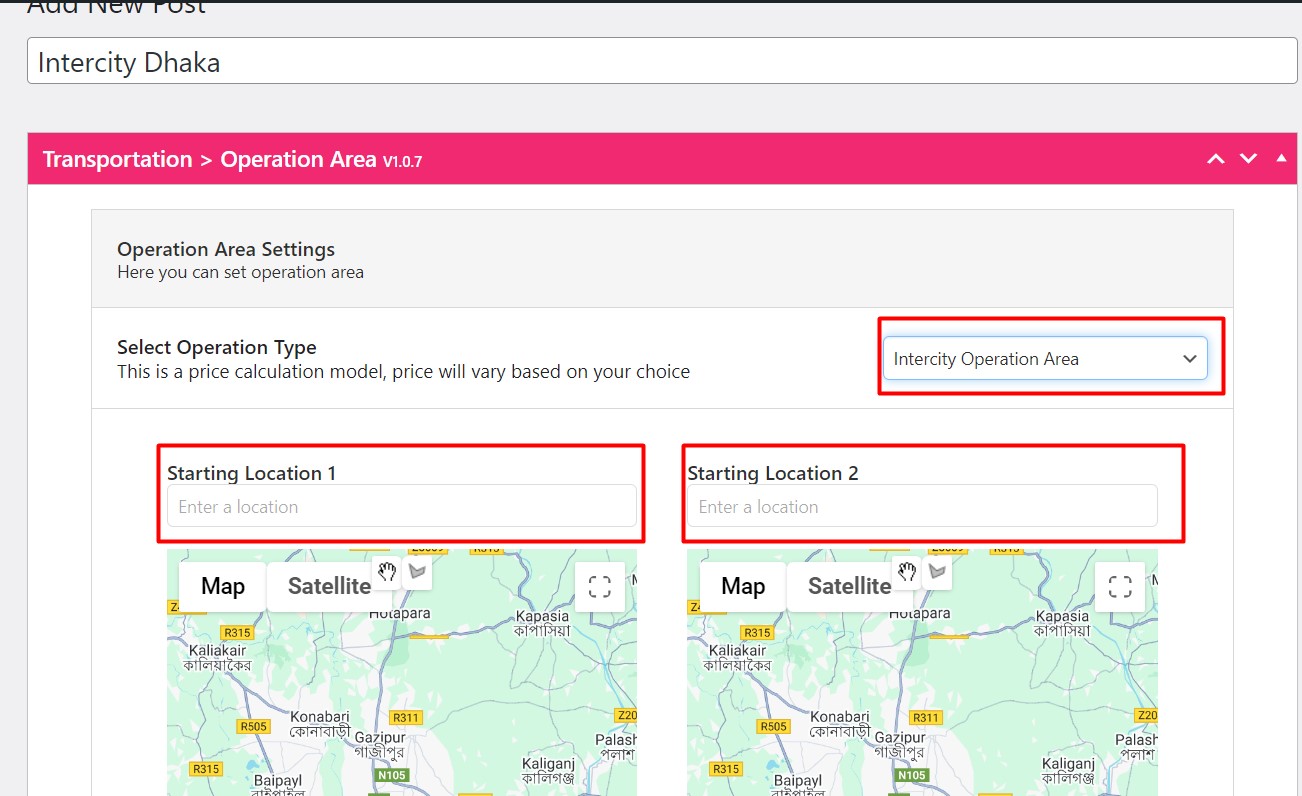
After both areas are drawn, configure the fare adjustment for that corridor. The plugin lets you apply the change as a fixed amount or a percentage.
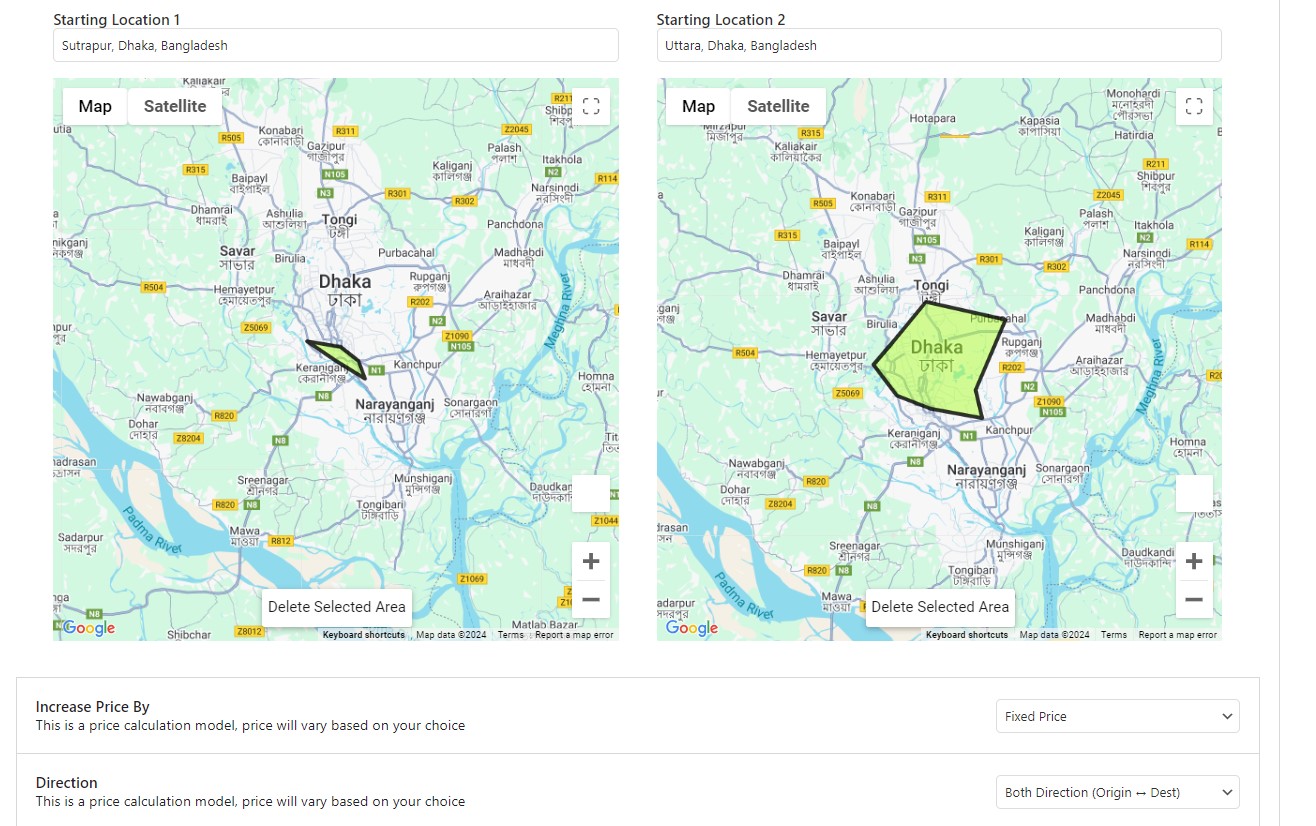
Next, choose the direction the adjustment applies to: both directions or one direction only. Directional pricing lets you charge a premium on the outward leg and a lower fare on the return, which is common when vehicles would otherwise drive back empty. Which of the two approaches to use depends on your cost structure — a percentage scales with trip length, a fixed amount stays the same on every booking.
Save the zone with Update, then assign it to the relevant vehicles: open a car under All Transportation and select the intercity zone in its Operation Area field.
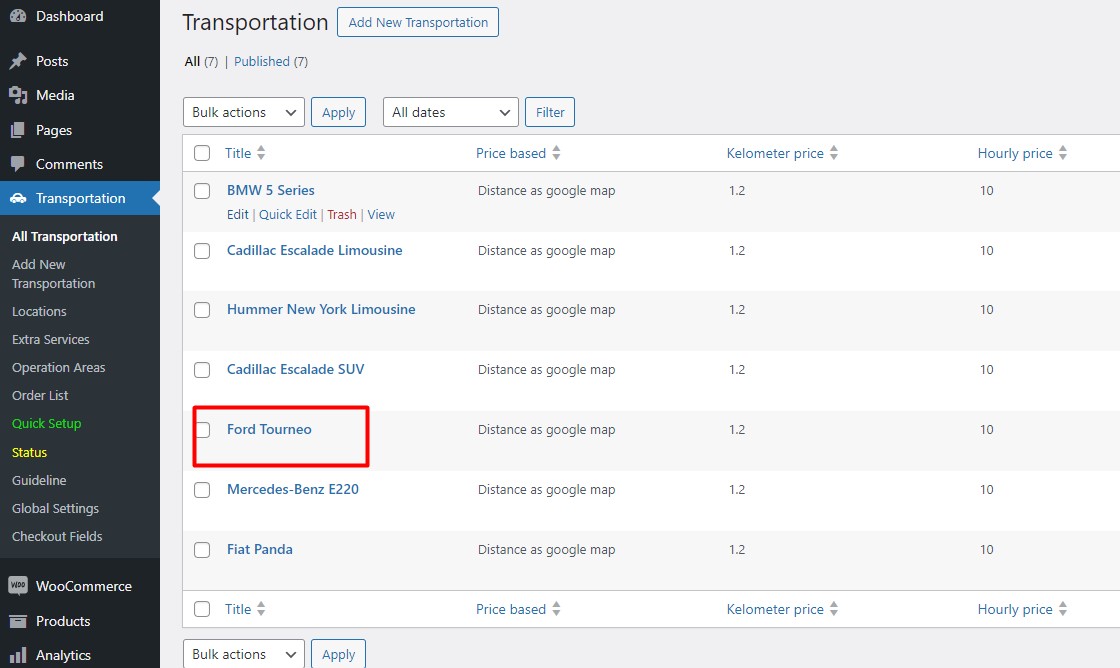
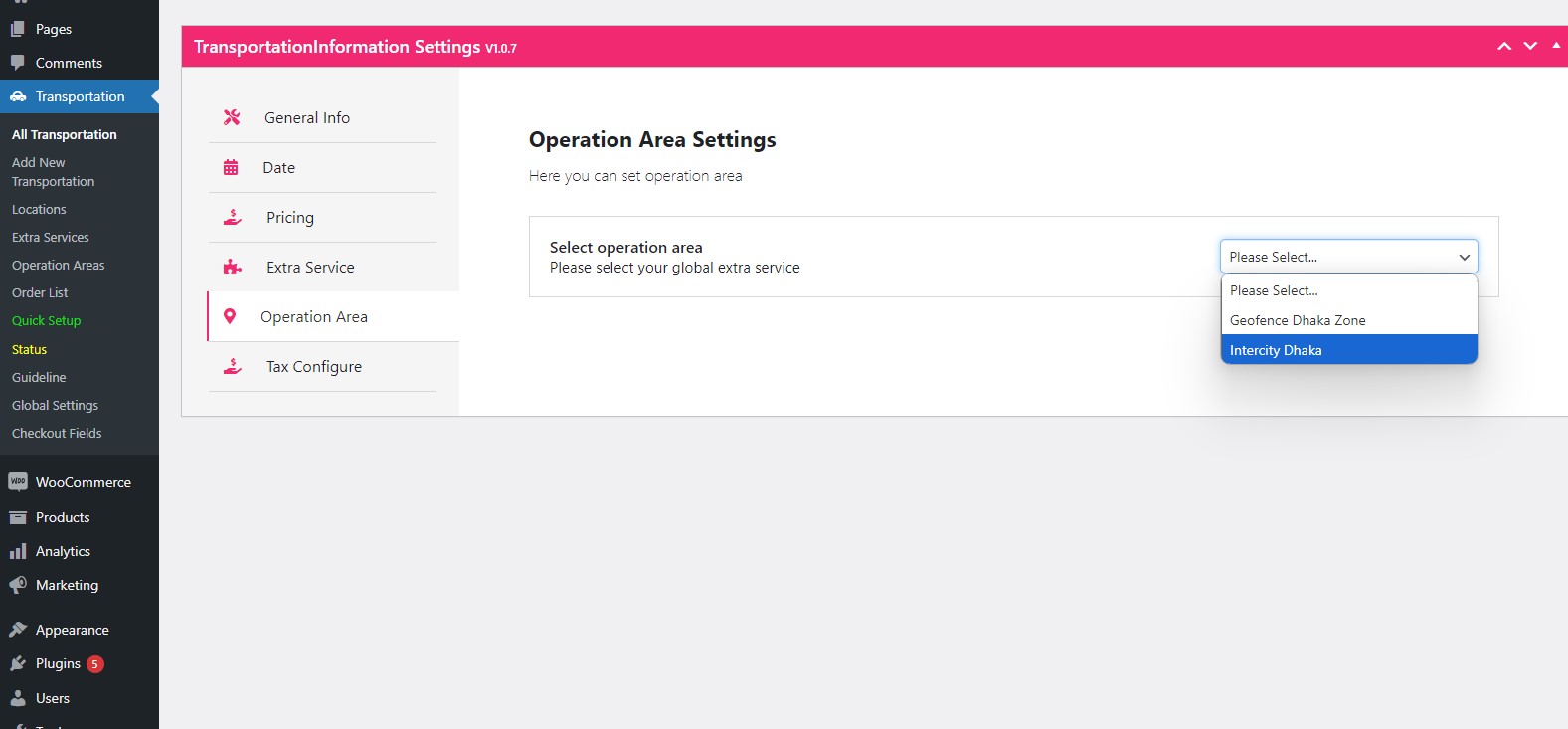
Finally, test it. On the booking site, enter a departure date and time and set pickup and drop-off inside the two mapped areas.
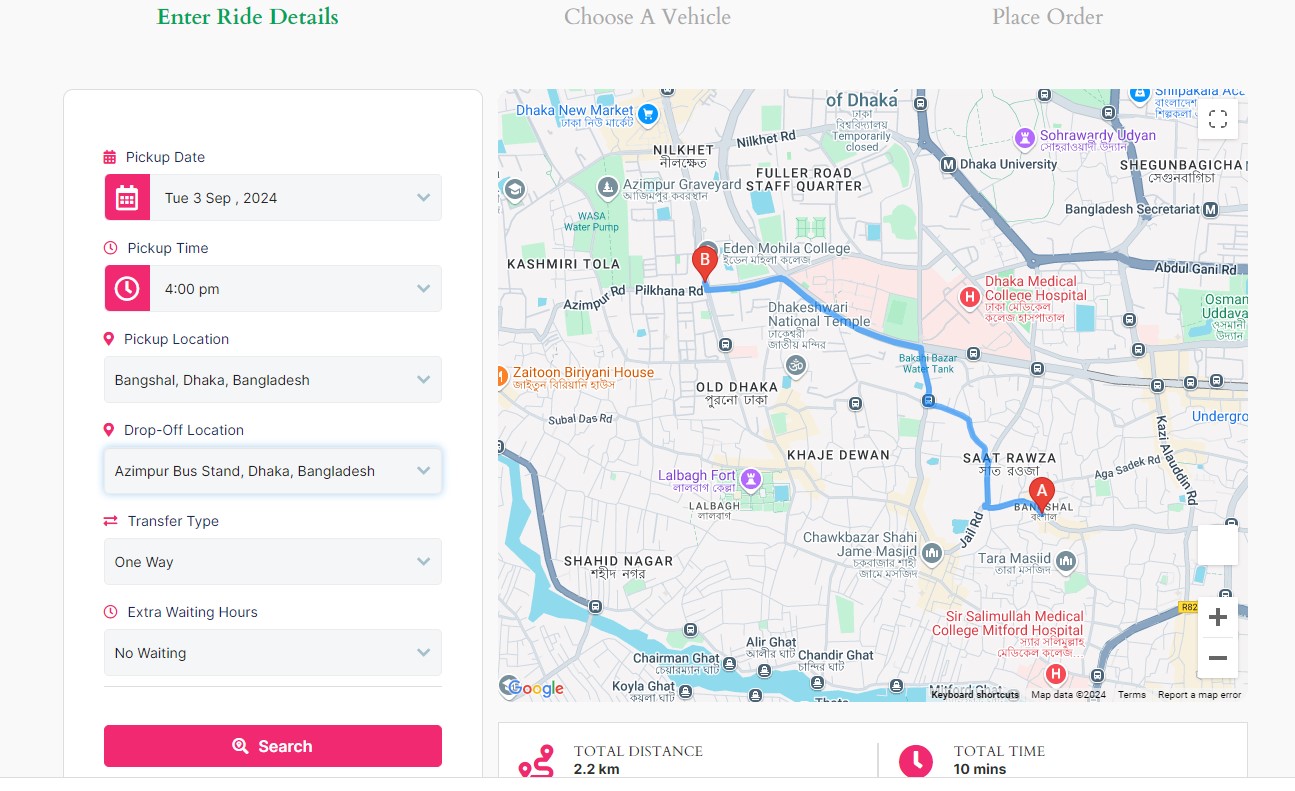
The configured car should appear with the intercity fare applied. Confirm both directions behave as expected — a one-direction rule that saves wrongly is easy to miss on a single test.
Single Operation vs Intercity Geofence: Which Do You Need?
| Use case | Zone type | What it controls |
|---|---|---|
| City rides, airport runs, hotel transfers within one district | Single Operation Area | Which vehicles are bookable inside the boundary |
| Long-distance trips between two towns or a city and a satellite town | Intercity Operation Area | Supported origin–destination pair, fare adjustment, and direction |
| Coverage that spans several districts | Multiple single operation zones | Separate boundaries and vehicles per district, managed individually |
Most operators need both: a set of single operation zones for everyday urban work, plus one intercity zone per corridor they promote. If you also apply fixed zone pricing at checkout, the two features are complementary rather than competing — our walkthrough on single operation areas and fixed zone pricing in eCab Taxi explains how the pricing side works.
Troubleshooting Geofencing in eCab
The map will not load or saved locations look wrong
Return to Transportation → Global Settings → Google Map API Settings and confirm the API key is present and the required Maps services are enabled with billing switched on in your Google Cloud project.
A car appears outside its zone
Open the vehicle, check that the Operation Area field holds the zone you expect, and re-save. If several zones exist with similar names, the dropdown may be showing the wrong one.
A car does not appear inside its zone
Look at where the pickup pin actually lands. A location on the edge of the polygon, or one geocoded to the wrong side of a river, will fail the test. Widen the boundary slightly at that edge, or verify the address geocodes to the place you mean.
Intercity fares do not change
Check three things in order: the fare adjustment type (fixed or percentage), the direction setting, and whether the picked-up vehicle actually has that intercity zone assigned. A correct zone with an unassigned car produces a normal fare.
Zone changes do not reach the front end
Clear any caching plugin or CDN cache for the booking pages. Map and script assets are commonly cached, and an old boundary can persist in the browser until the cache expires.
Best Practices for Managing Zones at Scale
- Name zones by geography, not by price. “North District” survives a fare change; “Surge Zone 2” does not.
- Document assignments. Keep a short internal list of which cars serve which zones, especially if drivers change vehicles.
- Review after every fare change. Percentage adjustments on intercity zones compound with base fare edits — re-test a sample route each time.
- Watch demand data. Zones that consistently return no vehicles usually mean the boundary is wrong or no car is assigned, not that demand is low.
- Keep a staging copy. Redraw and test boundary changes on a duplicate site before pushing them to production.
Zone configuration is only one item on a longer launch list. Our eCab taxi setup checklist walks through the other settings — payments, notifications and vehicle data — that need to be right before customers book.
Conclusion
Adding geofencing to the eCab plugin comes down to five moves: install the free plugin and WooCommerce, activate eCab Pro so the Operation Areas module appears, draw a single operation zone and an intercity zone, assign each zone to the right vehicles, and test both from the customer’s side of the site.
The value shows up quickly once zones are live: cleaner fleet allocation, fares that reflect where demand actually is, and a booking flow that only offers rides you can genuinely fulfil. Start with one well-drawn urban zone and one intercity corridor, verify both, then expand as you learn how customers move through your service area.
